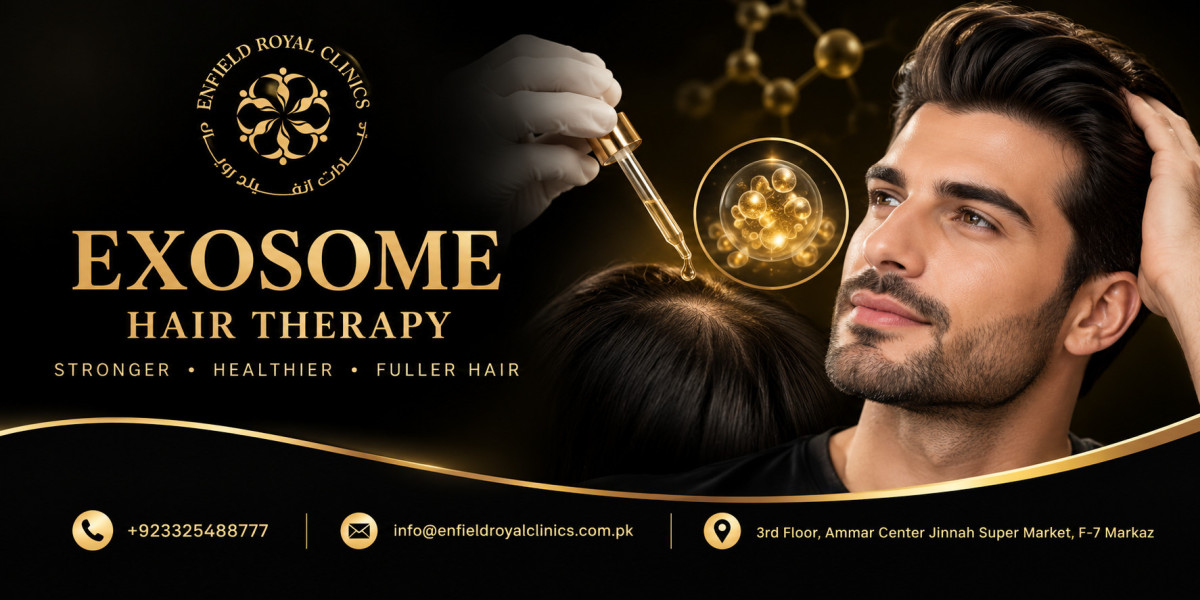

Healthy-looking hair is often associated with strength, shine, thickness, and a smooth texture. However, hair quality can change over time because of genetics, aging, nutritional deficiencies, hormonal changes, scalp conditions, and everyday styling habits. When hair becomes thinner, weaker, or more prone to breakage, many people begin exploring modern hair restoration options.
Exosome Hair Therapy in Islamabad is one emerging treatment that has attracted attention for its potential role in hair and scalp care. Exosomes are tiny structures that help cells communicate with one another, and researchers are investigating whether their biological signals could influence processes related to hair follicle function.
Although this research has created interest in exosome-based treatments, their ability to improve hair quality in humans has not been firmly established. Understanding what hair quality means, how exosomes are being studied, and which factors influence healthy hair can help people make informed treatment decisions.
What Is Exosome Hair Therapy?
Exosomes are small extracellular vesicles released by cells. They carry biological materials, including proteins, lipids, and signaling molecules, that may influence the activity of other cells. Scientists are studying their role in several biological processes, including cellular communication and tissue responses.
In hair restoration research, particular interest focuses on whether certain exosome preparations can affect cells associated with hair follicles. Researchers are investigating whether these signals might influence biological pathways connected with the hair growth cycle and the surrounding scalp environment.
Unlike a traditional hair transplant, exosome-based treatment does not involve surgically relocating hair follicles from one area of the scalp to another. Products marketed under this name may be applied to the scalp or delivered through different procedures, depending on the formulation and technique.
However, not every product described as an exosome treatment has the same composition, quality, or supporting evidence. Exosome therapy for hair loss remains an emerging area of research, and its effectiveness has not been established to the same degree as that of certain conventional hair-loss treatments.
People considering Exosome Hair Therapy in Islamabad should therefore understand the treatment's proposed purpose and limitations before deciding whether it is appropriate for them.
How Is Hair Quality Connected to Scalp and Follicle Health?
Hair quality involves several characteristics, including strand thickness, texture, strength, shine, and resistance to breakage. These characteristics are influenced by genetics, hair-care practices, environmental exposure, and the condition of the hair follicles.
Hair follicles produce new strands through a repeating growth cycle. Changes in follicle activity can contribute to thinning or the production of finer hairs. However, hair quality and hair density are not exactly the same.
For example, a person may have a full head of hair but experience dry, brittle strands because of heat styling or chemical damage. Another person may have relatively smooth hair but notice a widening part or reduced density because of hereditary hair loss.
The scalp also plays an important role. Persistent inflammation, certain skin conditions, and inadequate management of underlying health problems may affect the scalp and contribute to shedding in some individuals.
Researchers are exploring whether exosome-derived signals could influence cells involved in follicle function and tissue responses. These findings may eventually help explain whether specific preparations can improve certain aspects of hair health. At present, however, there is insufficient reliable clinical evidence to conclude that exosome therapy consistently improves hair strength, shine, texture, or thickness.
Identifying the actual cause of poor hair quality is therefore an important first step before choosing a treatment.
Can Exosome Hair Therapy Improve Hair Thickness and Texture?
One reason people explore Exosome Hair Therapy in Islamabad is the possibility of achieving thicker-looking, healthier hair. Researchers are investigating whether exosome preparations may influence biological processes associated with hair follicle activity.
If a particular treatment eventually demonstrates meaningful benefits in clinical studies, it may help clarify whether changes in follicle function can contribute to improvements in hair density or strand characteristics. However, these are research questions rather than guaranteed outcomes.
Several distinctions are important:
Hair thickness: The diameter of individual strands affects how full the hair appears. It has not been firmly established that exosome therapy reliably increases strand thickness.
Hair density: The number of visible hairs across the scalp influences coverage. Evidence is currently insufficient to confirm consistent increases in density from exosome-based treatments.
Hair texture: Roughness, dryness, and frizz are often related to the condition of the hair shaft and external damage. A scalp-focused procedure may not reverse damage that has already occurred along the length of the hair.
Hair strength: Breakage can result from heat, chemical processing, friction, or structural damage. There is not enough evidence to conclude that exosome therapy reliably strengthens existing hair strands.
People should also distinguish laboratory findings from results observed in human patients. A biological mechanism that appears promising in early research does not automatically translate into noticeable improvements in everyday hair quality.
A qualified healthcare professional can help determine whether the main concern involves hair thinning, excessive shedding, scalp health, or damage to existing strands. Each issue may require a different approach.
What Factors Can Affect Hair Quality and Growth?
Hair quality rarely depends on a single factor. Several influences may contribute to changes in thickness, texture, and strength, making it important to consider the person's overall circumstances.
Nutrition: Hair growth requires adequate energy, protein, and essential nutrients. Deficiencies involving iron or other nutrients may contribute to hair shedding in some people. However, supplements are unlikely to solve every hair concern, and excessive intake of certain vitamins or minerals can be harmful.
Hormonal and genetic influences: Hereditary hair loss may cause follicles to produce progressively finer hairs. Hormonal changes and certain medical conditions can also influence the hair growth cycle.
Scalp conditions: Persistent dandruff, inflammation, or other scalp disorders may cause discomfort and, in some cases, contribute to hair shedding. Appropriate treatment depends on the underlying condition.
Heat and chemical damage: Frequent use of high-temperature styling tools, bleaching, chemical straightening, and harsh treatments can weaken the hair shaft. This damage may make strands rough, dull, and more likely to break.
Stress and illness: Significant physical stress, illness, or other health changes may trigger temporary shedding. The timing and severity vary, and persistent hair loss deserves an assessment.
Hair-care habits: Tight hairstyles, vigorous brushing, and repeated friction can contribute to breakage or traction-related hair loss.
Understanding these factors can help people choose practical measures that address their specific concerns instead of relying on one treatment for every aspect of hair quality.
Who May Consider Exosome Hair Therapy in Islamabad?
People experiencing hair thinning may be interested in emerging treatments, especially if they want to explore options beyond conventional medication or surgery. However, suitability depends on the underlying cause of hair loss, scalp condition, medical history, and the evidence available for the proposed product.
An initial assessment may include reviewing the pattern and duration of shedding, examining the scalp, and discussing relevant health conditions, medications, and previous treatments. Further investigations may be appropriate when nutritional deficiencies, hormonal issues, or other medical causes are suspected.
Some individuals may benefit more from established treatments. For certain types of hair loss, options such as topical minoxidil or appropriate prescription medication may be considered after professional evaluation. If hair quality has deteriorated because of chemical damage or excessive heat, changes in hair-care practices may be more relevant than a scalp procedure.
Sudden hair loss, patchy bald areas, severe itching, scalp pain, redness, or persistent scaling should be evaluated before any cosmetic treatment. These symptoms may indicate conditions requiring specific medical care.
People exploring Exosome Hair Therapy in Islamabad should also ask whether the product is supported by human clinical research, what its intended use is, and whether its quality and regulatory status can be verified.
What Are the Safety Concerns and Limitations?
Exosome-based hair treatments are still being investigated, and high-quality clinical evidence remains limited. More research is needed to establish their effectiveness, identify appropriate candidates, determine the best treatment protocols, and understand long-term outcomes.
Product quality is a particular consideration. Preparations may differ in their source, composition, purity, manufacturing standards, storage, and biological activity. As a result, findings from one preparation cannot automatically be applied to every product marketed as an exosome treatment.
Possible risks depend on the product and delivery method. Procedures involving injections or other skin-penetrating techniques may cause discomfort, irritation, inflammation, or infection. Unexpected reactions are also possible, and the complete safety profile of some preparations remains uncertain.
Regulatory status should be checked carefully. The US Food and Drug Administration has stated that there are no FDA-approved exosome products. Requirements differ across countries and intended uses, so people considering treatment in Islamabad should verify the relevant Pakistani regulatory status rather than assuming that a product is authorized.
No treatment should be presented as a guaranteed way to produce thicker, stronger, or permanently healthier hair. Claims promising rapid improvement or identical results for everyone deserve careful scrutiny.
How Can People Support Better Hair Quality?
A practical hair-care routine can help protect existing strands, even when it cannot reverse every cause of thinning. The most useful approach depends on whether the main concern is breakage, dryness, shedding, or reduced density.
Use gentle hair-care products: A suitable shampoo and conditioner can help maintain cleanliness and reduce friction during grooming.
Limit excessive heat: Reducing frequent high-temperature styling can help prevent damage to the hair shaft.
Avoid excessive tension: Looser hairstyles and gentle brushing can reduce breakage and traction on the follicles.
Maintain balanced nutrition: A varied diet with adequate protein and essential nutrients supports normal hair growth. Suspected deficiencies should be assessed rather than treated with high-dose supplements without guidance.
Address scalp symptoms: Persistent irritation, scaling, or itching may require targeted treatment.
Seek advice for ongoing hair loss: A professional assessment can help identify the cause and determine whether an established treatment is appropriate.
People should also recognize that existing damage to the hair shaft cannot always be reversed by a scalp treatment. Conditioning products may improve the feel and appearance of damaged strands, while prevention helps protect new growth from further damage.
Frequently Asked Questions
1. Does Exosome Hair Therapy improve hair quality?
Its potential role in hair restoration is being studied, but current clinical evidence is insufficient to confirm that exosome therapy consistently improves hair texture, strength, thickness, or shine. Results should not be guaranteed.
2. Can Exosome Hair Therapy in Islamabad make thin hair thicker?
There is not enough reliable evidence to establish that exosome-based treatments consistently increase hair thickness. The cause of thinning matters, and established treatments may be more appropriate for certain conditions.
3. Is exosome treatment suitable for damaged or brittle hair?
Not necessarily. Brittle hair often results from heat styling, chemical processing, friction, or damage to the hair shaft. These concerns may respond better to gentle hair care and reduced exposure to damaging practices than to an emerging scalp treatment.
4. What should someone check before considering exosome hair treatment?
The person should ask about the product's source, composition, quality controls, intended use, clinical evidence, possible risks, and applicable regulatory status. A qualified healthcare professional can also help assess the cause of hair loss and explain established alternatives.
Conclusion
Exosome Hair Therapy in Islamabad is attracting interest because researchers are exploring how exosomes may influence cellular communication and processes associated with hair follicles. These investigations may contribute to future developments in hair restoration, but there is not yet sufficient evidence to establish that exosome therapy reliably improves hair quality in humans.
The best starting point is to understand what is affecting the hair, whether it is thinning, shedding, dryness, or breakage. By addressing underlying causes, following appropriate hair-care practices, and comparing emerging treatments with evidence-based options, individuals can make more informed decisions about maintaining healthier-looking hair.