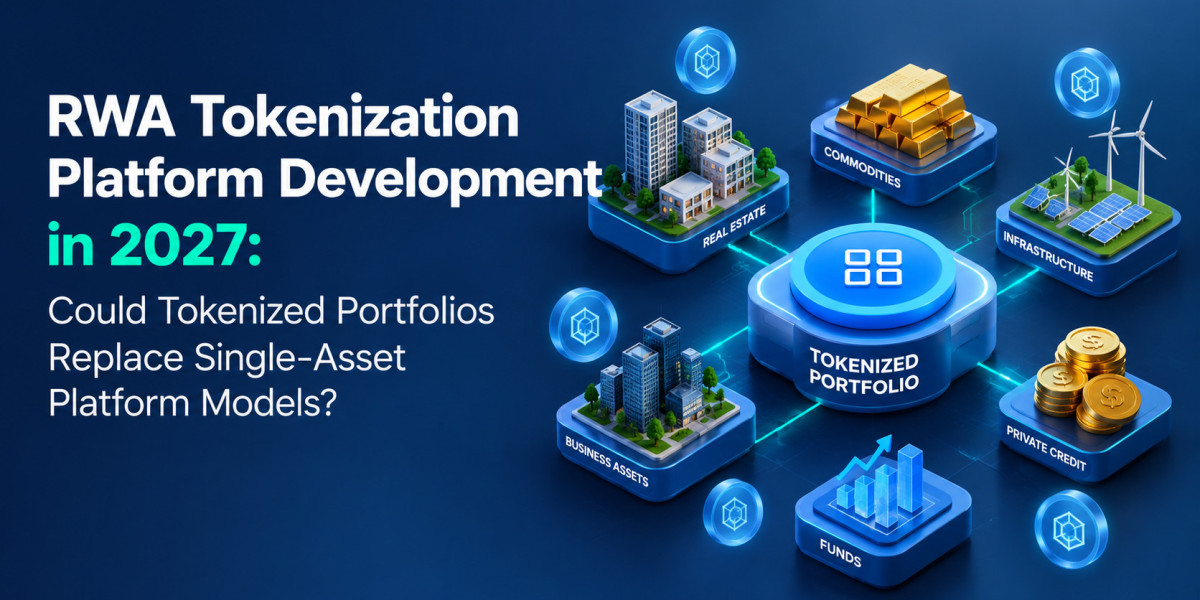

The real-world asset market is moving toward models where investors can access property, private credit, commodities, funds, infrastructure, and other off-chain assets through blockchain-based ownership records. Early RWA platforms often focused on one asset class, such as real estate or private credit. By 2027, the discussion may shift toward portfolio-based platforms that group several tokenized assets under a single investment environment.
This raises an important question: could tokenized portfolios replace single-asset platform models? The answer depends on regulation, asset selection, investor demand, liquidity, custody, valuation, and the technical structure of the platform. Portfolio-based systems offer a broader investment experience, but single-asset platforms can remain useful where a specific market requires specialist knowledge and regulatory treatment.
What Is a Tokenized Portfolio?
A tokenized portfolio is a collection of real-world assets represented through blockchain-based tokens or digital ownership records. Instead of purchasing exposure to one property, one loan, or one commodity, an investor may access several assets through a portfolio.
For example, a platform could offer a portfolio containing commercial properties, private credit instruments, infrastructure projects, and commodity-linked assets. Each asset could have its own token, legal structure, valuation method, distribution schedule, and compliance requirements.
The portfolio layer sits above individual assets. Investors could potentially select a portfolio according to factors such as asset class, geography, expected income, duration, or risk characteristics. This model resembles traditional funds in some ways, although the legal and technical structures can differ significantly.
For an RWA tokenization company, this creates a wider product scope. Instead of creating a platform around one asset category, the business can consider a system capable of supporting several asset types while keeping their individual legal and operational requirements separate.
Why Single-Asset Platforms Became Popular
Single-asset platforms have a practical advantage because they focus on a defined market. A real estate platform, for instance, can concentrate on property ownership, rental income, property valuations, investor documentation, and related compliance requirements.
The same principle applies to private credit, commodities, art, infrastructure, or other assets. A specialized platform can develop processes around the characteristics of its chosen market rather than handling several unrelated asset structures.
This approach may also make the user experience easier. An investor interested only in property does not necessarily need a dashboard containing commodities, credit instruments, infrastructure projects, and fund products.
For an RWA tokenization development company, single-asset systems can also reduce the number of asset-specific workflows that need to be supported during the first release. This does not mean they will disappear in 2027. Rather, they may coexist with broader portfolio platforms.
Why Tokenized Portfolios Could Gain Attention in 2027
Portfolio-based investing addresses a common limitation of single-asset platforms: concentration. Investors may prefer exposure to several assets rather than placing capital into one property, one loan, or one project.
Blockchain infrastructure can provide a shared environment where different tokenized assets are represented, tracked, transferred, and administered. However, the blockchain itself does not remove the legal differences between assets.
A portfolio platform therefore needs more than token issuance. It needs asset onboarding, investor verification, portfolio accounting, custody arrangements, compliance checks, valuation systems, reporting, distributions, and secondary-market controls.
The growth of tokenized portfolios in 2027 could therefore depend less on the novelty of blockchain and more on whether these operational components work together effectively.
How a Portfolio-Based RWA Platform Could Work
The process can begin with asset selection. A platform operator identifies assets that meet its investment and legal requirements. Each asset is then reviewed for ownership, valuation, documentation, cash-flow characteristics, and applicable regulations.
The next stage involves creating the digital representation of each asset. Depending on the legal structure, tokens may represent ownership interests, fund units, debt claims, revenue rights, or another legally defined interest.
Investors then complete onboarding and eligibility checks. Once approved, they can purchase eligible portfolio products or individual asset positions.
The platform records transactions and portfolio allocations. Income from rental properties, interest payments, commodity-linked returns, or other cash flows can be accounted for according to the legal agreements.
A portfolio dashboard could show holdings, transaction history, distributions, asset information, and relevant performance data. The exact information available to investors would depend on regulations and the structure of the offering.
Portfolio Construction Methods
There are several ways a tokenized portfolio could be structured.
Fixed Allocation Portfolios
A fixed allocation portfolio could assign predetermined percentages to different asset categories. For example, a portfolio might contain 40% property, 30% private credit, 20% infrastructure, and 10% commodities.
The allocation could remain unchanged for a defined period. Rebalancing could occur according to predefined rules.
Income-Focused Portfolios
An income-oriented portfolio could concentrate on assets that generate recurring cash flows. These might include rental properties, private credit, infrastructure contracts, or other income-producing assets.
Investors could receive distributions based on the legal rights attached to their portfolio interests.
Thematic Portfolios
A platform could also group assets around a particular theme. Examples might include renewable infrastructure, commercial property, emerging-market credit, or technology infrastructure.
This approach allows the portfolio to be organized around an investment theme rather than a single asset class.
Custom Portfolio Selection
Some platforms may allow investors to select individual tokenized assets and create their own allocations. This model offers greater flexibility but requires more sophisticated portfolio management and investor suitability controls.
What Changes in RWA Tokenization Platform Development?
Moving from a single-asset system to a portfolio model changes the technical requirements considerably.
An RWA tokenization platform development project may need a multi-asset registry that records information for different asset categories. Each asset can have its own metadata, ownership structure, valuation information, compliance status, and distribution schedule.
The platform may also require portfolio accounting. When an investor purchases a portfolio token, the system needs to track the investor's interest in the underlying assets according to the applicable legal structure.
Smart contracts can manage token transfers and certain automated processes, while off-chain systems may handle legal records, valuation information, identity verification, banking operations, and asset administration.
This creates a hybrid architecture rather than a blockchain-only system.
Smart Contracts and Portfolio Tokens
Smart contracts can play several roles in a portfolio platform. They may manage token issuance, transfer restrictions, ownership records, distribution calculations, and certain compliance rules.
A portfolio token could represent an interest in a fund, special-purpose vehicle, trust, or another legal entity that owns multiple assets. In this case, the token does not necessarily represent direct ownership of every underlying asset.
This distinction is important. A token's legal meaning depends on the documents and jurisdiction governing the investment.
An RWA token development project therefore needs legal structuring alongside smart contract development. The technical representation should correspond with the rights investors actually receive.
Compliance in Multi-Asset Platforms
Compliance becomes more complicated when multiple asset classes are placed on one platform.
Different assets may be subject to different rules. Property interests, private debt, fund units, commodities, and infrastructure investments can have different investor eligibility requirements, disclosure obligations, transfer restrictions, and reporting requirements.
The platform may need identity verification, investor classification, transaction monitoring, sanctions screening, wallet controls, geographic restrictions, and record keeping.
A multi-asset platform should therefore separate compliance rules where necessary rather than treating every token in exactly the same way.
This is one reason an RWA tokenization platform development company needs to consider regulatory architecture during the early design stage rather than adding compliance functions after token issuance.
Liquidity: Portfolio vs Single Asset
Liquidity is frequently discussed as one of the potential benefits of tokenization, but tokenization alone does not create buyers and sellers.
A single-asset platform may have limited trading activity because the available investment opportunities are concentrated. A portfolio platform could potentially attract a wider group of investors because it offers several asset categories.
However, portfolio liquidity depends on market demand, legal transfer restrictions, investor eligibility, trading venues, pricing, market makers, and the underlying asset structure.
If the underlying assets cannot be freely transferred, the token representing them may also face restrictions. Therefore, a portfolio token should not automatically be treated as a liquid security simply because it exists on a blockchain.
Valuation Challenges
Portfolio platforms also face a valuation problem.
Publicly traded assets can often be priced frequently through established markets. Real-world assets such as private property, private credit, infrastructure projects, and specialized commodities may require periodic valuation.
A portfolio platform must determine how asset values are calculated and updated. It may use independent appraisals, financial models, market data, administrator reports, or other approved sources.
Different valuation frequencies can also create complications. A portfolio containing several asset classes may have some values updated daily, others monthly, and others quarterly.
The platform must present this information accurately so investors understand how portfolio values are determined.
Custody and Asset Administration
Token ownership and physical or legal ownership are not necessarily the same thing.
A real-world asset may remain under the custody of a company, fund, trust, special-purpose vehicle, bank, custodian, or another legal entity. The token may represent an investor's interest in that structure.
Portfolio platforms therefore need clear relationships between blockchain records and off-chain asset administration.
For a Real-world asset tokenization company, this can become an important part of platform planning. The business needs to consider where assets are held, who manages them, how income is collected, and how investor rights are recorded.
Can Portfolio Platforms Replace Single-Asset Models?
It is unlikely that one model will completely replace the other.
Single-asset platforms can remain useful for businesses that want to specialize in one market. A property-focused platform may provide detailed tools for rental income, property documentation, maintenance records, and property-specific reporting.
Portfolio platforms can serve investors who want exposure to several asset classes through one environment.
The two models can also exist together. A business may begin with one asset class and later introduce multi-asset portfolios. Another approach is to operate separate asset-specific modules while providing a portfolio layer above them.
This modular model could allow individual assets to retain their own compliance and administration processes while investors interact with a broader portfolio interface.
Business Models for 2027
A portfolio-oriented RWA platform can generate revenue through several models. These may include issuance fees, asset onboarding charges, management fees, transaction fees, custody-related charges, administration fees, or subscription-based services.
The exact model depends on the business structure and regulatory environment.
An RWA tokenization development project can also be designed for different customer groups. Financial institutions may require institutional portfolio tools, while private investment firms may seek specialized asset management functions. Retail-facing platforms may require simpler interfaces and additional investor protections.
The business model should therefore be connected to the intended investor group and asset structure.
Technology Architecture for Portfolio Platforms
A portfolio RWA platform may contain several layers.
The asset layer stores information about properties, loans, commodities, infrastructure projects, funds, or other assets.
The token layer manages digital representations and transfer rules.
The compliance layer handles identity verification, investor eligibility, transaction monitoring, and restrictions.
The portfolio layer manages allocations, ownership interests, valuation information, and portfolio reporting.
The payment layer manages subscriptions, redemptions, distributions, and settlement processes where permitted.
The user layer provides investor dashboards, asset information, portfolio views, transaction history, and reporting.
External services may provide market information, valuation data, identity verification, banking connectivity, custody, and other operational functions.
What Investors May Look for in 2027
Investors considering tokenized portfolios may look beyond the token itself. They may want information about the underlying assets, legal structure, fees, valuation methods, custody arrangements, historical performance, distribution policies, and transfer restrictions.
Portfolio reporting may also become more important. Investors could expect to see how their allocation is divided across assets, sectors, regions, and income sources.
The quality of this information can influence how investors evaluate a platform. A token with limited information about its underlying assets may not provide the same investment experience as a product with detailed documentation and reporting.
Role of RWA Tokenization Development
RWA tokenization development is moving toward systems that connect blockchain records with established financial and asset-management processes.
The focus is no longer limited to creating a token contract. Developers may need to work on investor onboarding, asset registries, compliance rules, portfolio accounting, payment systems, custody integrations, reporting, and administrative workflows.
For an RWA tokenization company, this means platform planning should begin with the asset and investment structure. The technology can then be selected around those requirements.
A business that wants to create a portfolio platform may also need separate modules for different asset categories. This can help prevent one asset class from dictating the rules for every other asset.
Could Tokenized Portfolios Become the Main Platform Model?
The answer will depend on how investors, regulators, asset owners, financial institutions, and technology providers respond to the model.
Portfolio products offer a way to combine several tokenized investments under one investment experience. They could become useful for investors seeking diversified exposure without interacting separately with numerous single-asset platforms.
However, portfolio platforms introduce additional complexity. They must handle different assets, legal structures, valuation cycles, compliance requirements, custody arrangements, and cash-flow patterns.
Therefore, 2027 may not mark the end of single-asset platforms. Instead, the market could move toward a combination of specialized asset platforms and portfolio layers that bring several tokenized investments together.
Conclusion
Tokenized portfolios could become an important model within RWA tokenization platform development in 2027, particularly as investors and financial businesses look for ways to access multiple real-world assets through one digital environment. However, they are unlikely to make single-asset platforms irrelevant because different asset classes require different legal, operational, valuation, and compliance processes. A practical approach may involve specialized asset modules connected to a portfolio layer that manages allocations, reporting, investor access, and distributions. The success of this model will depend on the quality of asset selection, regulatory structure, custody, valuation, liquidity arrangements, smart contracts, and investor services rather than tokenization alone. Businesses planning an RWA platform can therefore evaluate whether a single-asset, multi-asset, or hybrid model fits their target market and regulatory environment. Blockchain App Factory provides RWA tokenization development services.
FAQs
1. What is RWA tokenization platform development?
RWA tokenization platform development involves creating technology that represents real-world assets through blockchain-based tokens or digital ownership records. It can include asset management, token issuance, investor onboarding, compliance, wallets, payments, reporting, and portfolio management.
2. What is a tokenized portfolio?
A tokenized portfolio is a collection of tokenized real-world assets presented as one investment product or portfolio. It can contain different asset categories depending on the legal and investment structure.
3. Can tokenized portfolios replace single-asset platforms?
They could become an alternative for investors seeking exposure to several asset classes, but they are not necessarily a replacement for single-asset platforms. Both models can operate within the same RWA market.
4. What assets can be included in an RWA portfolio?
Depending on the legal structure, portfolios can include real estate, private credit, commodities, infrastructure, funds, collectibles, and other assets that can be represented through compliant digital instruments.
5. Why is compliance important for tokenized portfolios?
Different assets can have different regulatory requirements. A portfolio platform may therefore need investor verification, eligibility checks, transaction monitoring, transfer restrictions, geographic controls, and reporting processes.
6. What role do smart contracts play in RWA platforms?
Smart contracts can manage token issuance, ownership records, transfer rules, distributions, and other predefined processes. Their functions should correspond with the legal rights associated with the token.
7. Does tokenization automatically make an asset liquid?
No. Tokenization provides a digital representation, but liquidity depends on buyers, sellers, market infrastructure, legal restrictions, pricing, and demand for the underlying asset.
8. What is the difference between RWA tokenization and RWA token development?
RWA tokenization refers to the broader process of representing real-world assets digitally, including legal, financial, operational, and technical elements. RWA token development generally focuses on creating the token and its related blockchain functionality.
9. What does an RWA tokenization platform development company provide?
An RWA tokenization platform development company may provide services covering platform architecture, smart contracts, token issuance, investor dashboards, compliance integrations, wallets, asset management, portfolio functions, payment systems, and reporting.
10. Will RWA platforms focus more on portfolios in 2027?
Portfolio-based RWA products may receive greater attention as the market develops, but the direction will depend on investor demand, regulation, institutional participation, asset availability, and the ability of platforms to manage different asset types effectively.