
Early crown thinning can be difficult to judge because the scalp may become visible before a clearly bald area develops. FUE Hair Transplant in Dubai can be considered when crown density has declined enough to create a persistent visual deficit, but early-stage thinning requires a more conservative assessment than advanced crown loss. The priority is determining whether native follicles can still be preserved and whether graft placement would provide a meaningful improvement without unnecessarily using donor supply.
Understanding Early Crown Thinning
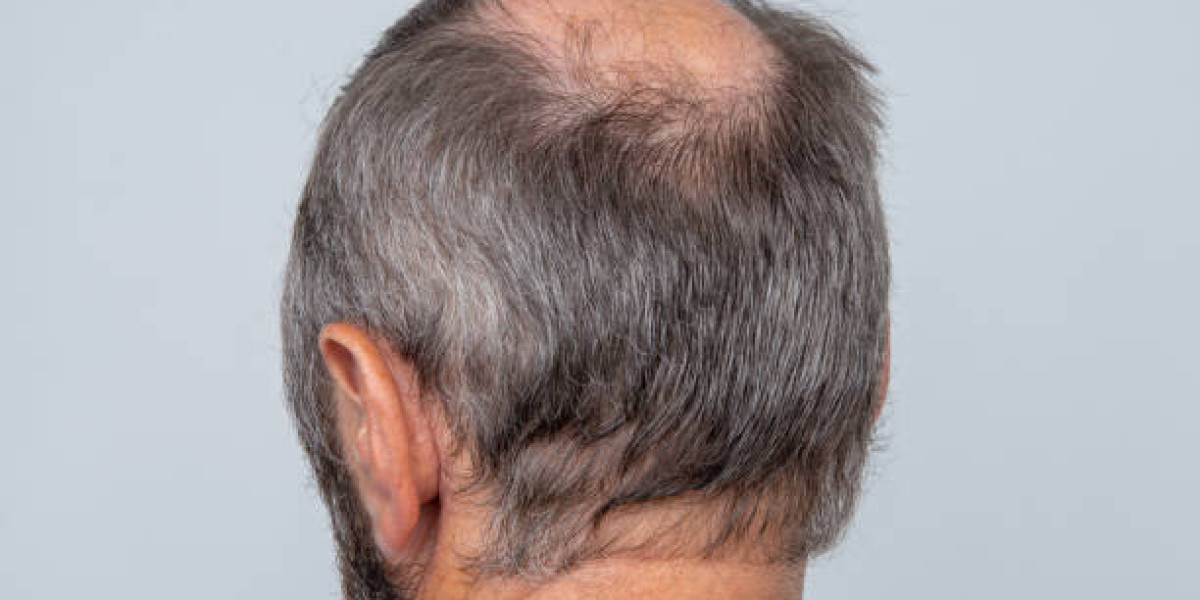
Early crown thinning usually develops gradually around the vertex rather than appearing as a sharply defined bald patch. Hair may still cover the area, but reduced caliber, wider spacing, or increased scalp visibility can make the crown look lighter under overhead lighting.
Early Miniaturization Versus Established Loss
A crown containing miniaturized follicles is different from a crown where follicles have been permanently lost. Miniaturized hairs may still contribute to coverage, so removing or disturbing them during recipient-site creation can reduce existing density.
This makes diagnosis particularly important. A clinical assessment should distinguish between follicles that are producing progressively finer hairs and areas where follicular units are no longer viable.
Why the Crown Can Look Thinner Before It Becomes Bald
The crown is naturally affected by the direction and rotation of hair around the vertex. Even a moderate reduction in hair caliber can therefore produce noticeable scalp show-through.
Lighting, wet hair, short hairstyles, and overhead viewpoints can exaggerate the appearance. A consistent change across different conditions is more useful than judging the crown from a single photograph.
When FUE May Be Considered for Early Crown Thinning
Not every early crown change requires immediate transplantation. The decision depends on the pattern, progression, native follicle condition, donor characteristics, and the amount of density that can realistically be improved.
Persistent Density Reduction
If crown thinning remains visible over time and the surrounding hair continues to lose density, FUE may be considered as part of a structured restoration plan.
The objective is not to recreate an unnaturally dense crown. Instead, grafts can be positioned strategically to reduce scalp visibility while working around surviving native follicles.
A Stable Enough Pattern for Planning
Early intervention becomes more complex when hair loss is actively progressing. If the surrounding native hair is rapidly miniaturizing, newly transplanted grafts may improve the crown temporarily while untreated follicles continue to thin.
A clinician may therefore evaluate the pattern over time and consider appropriate medical management before deciding that surgical restoration is warranted.
How the Crown Is Assessed Before FUE
Crown restoration starts with mapping rather than simply counting visible bald spots. The clinician evaluates the vertex, surrounding mid-scalp, existing hair density, hair caliber, donor characteristics, and direction of native growth.
Density Mapping
The crown should be assessed as a three-dimensional region rather than a flat circular target. The area immediately surrounding the thinning zone can influence how the restored section blends with existing hair.
Density mapping helps determine where additional coverage would have the greatest visual effect and where native follicles should be left undisturbed.
Hair Caliber Matters
A thicker donor hair can provide more visual coverage with fewer follicular units than very fine hair. Conversely, fine native crown hair may require particularly careful spacing because aggressive placement can interfere with existing follicles.
The assessment should therefore consider both the number of grafts available and their physical characteristics.
Protecting Native Hair During Early Crown Restoration
One of the defining challenges of early crown thinning is that the recipient area may still contain substantial native hair. FUE planning must account for these follicles rather than treating the region as completely bald.
Selective Recipient-Site Creation
Recipient channels need to be positioned between existing follicular units with appropriate spacing. Poor placement can damage native follicles or create an irregular pattern that becomes more obvious as surrounding hair changes.
The angle and direction of the channels should also follow the natural crown flow rather than imposing a uniform forward-facing pattern.
Avoiding Unnecessary Density
Adding grafts everywhere that scalp is visible is not necessarily the correct approach. A controlled distribution can improve visual coverage while leaving sufficient space for native follicles and allowing future treatment options.
This is particularly relevant for people whose crown loss is still evolving.
Crown Direction and the Natural Whorl
The vertex does not behave like the frontal hairline. Hair generally changes direction around a rotational center, creating a whorl that varies between individuals.
Following Existing Growth
Grafts placed in the crown need to follow the existing directional pattern. The rotational transition becomes increasingly important as the placement approaches the center of the whorl.
When the direction is inconsistent, transplanted hairs can appear separated from the surrounding native growth even when the overall density is adequate.
The Center of the Crown Requires Restraint
The central whorl is often not the best place to pursue maximum density. A carefully designed pattern can create better visual continuity by reinforcing surrounding zones while respecting the natural rotational center.
This approach can also help conserve donor grafts for areas that may become more important if future hair loss progresses.
Planning Around Future Crown Changes
Early crown thinning presents a long-term planning issue because the visible thinning today may not represent the final pattern.
Native Hair Can Continue to Change
Transplanted follicles and native follicles do not necessarily behave in the same way. Grafts selected from a stable donor region may remain comparatively resistant to the pattern of loss, while susceptible native crown follicles can continue to miniaturize.
For this reason, crown restoration should be designed around both the current appearance and plausible future changes.
Donor Supply Should Not Be Used Prematurely
A limited crown problem does not justify exhausting donor resources simply to produce maximum short-term density. Conservative graft allocation can leave options available if additional thinning develops later.
This is particularly important when the frontal hairline and mid-scalp may also require future attention.
Medical Management and FUE Can Have Different Roles
Early thinning may involve follicles that are weakened rather than completely absent. Depending on the diagnosis, a clinician may consider non-surgical approaches that aim to stabilize or support existing hair before, alongside, or after surgical restoration.
When Native Follicles Still Produce Hair
If hairs are present but increasingly fine, preserving those follicles can be valuable. Restoring the area surgically does not replace the need to consider the condition of the surrounding native hair.
The treatment strategy should therefore address both the visible density problem and the underlying progression of the patient's hair-loss pattern.
When Surgery Becomes More Relevant
FUE becomes more relevant when the density deficit is persistent, the recipient area can accommodate grafts safely, and the expected improvement justifies using donor follicles.
A consultation can determine whether the crown requires restoration now or whether monitoring and preservation should remain the immediate priority.
Hair Characteristics Influence Crown Coverage
The visual result depends on more than graft count. Hair shaft diameter, curl or wave, color contrast with the scalp, and the direction of growth all affect perceived coverage.
Thick Versus Fine Hair
Thicker hair shafts generally create greater visual mass. Fine hair may require more careful distribution to reduce scalp show-through without producing an artificial pattern.
The clinician should evaluate these characteristics before deciding how grafts should be distributed across the vertex.
Hair and Scalp Contrast
A strong contrast between hair and scalp can make early thinning more noticeable. This does not necessarily mean the patient has a large area of follicular loss.
It reinforces the importance of examining actual follicular density rather than basing treatment decisions solely on how visible the scalp appears.
Recovery After Crown-Focused FUE
Crown restoration follows the general recovery principles of FUE, although patients should take particular care not to disturb newly implanted grafts.
The Initial Healing Period
Mild redness, small crusts, tightness, or sensitivity can occur during the early healing period. Newly implanted grafts need protection from friction, pressure, scratching, and unnecessary manipulation.
Post-operative washing instructions should be followed precisely rather than using aggressive cleansing methods.
Temporary Shedding Can Occur
Transplanted hairs may shed after implantation before new growth develops. This temporary shedding should not automatically be interpreted as treatment failure.
Visible regrowth and thickening take time, and the crown can be one of the areas where changes are difficult to judge during the early stages.
Dubai-Specific Considerations During Recovery
Patients recovering in Dubai should account for environmental conditions as part of their aftercare planning. Strong sunlight, high outdoor temperatures, and frequent movement between hot outdoor environments and heavily air-conditioned interiors can make scalp comfort more challenging.
Sun and Heat Exposure
Freshly treated scalp skin should be protected according to the surgeon's instructions. Direct sun exposure and excessive heat should be avoided during the period when the scalp remains particularly sensitive.
Indoor Air Conditioning
Extended exposure to dry air conditioning can contribute to scalp dryness or discomfort for some patients. Gentle, surgeon-approved care is preferable to adding cosmetic products that could interfere with the healing process.
What Patients in Dubai Should Do Next
Someone noticing early crown thinning should start with assessment rather than assuming that transplantation is immediately necessary. Useful evaluation includes examination of the crown and surrounding scalp, donor-zone assessment, review of the hair-loss pattern, and comparison of hair caliber across affected and unaffected regions.
A treatment plan can then determine whether the priority should be monitoring, native-hair preservation, medical management, FUE, or a staged combination of approaches. For patients who do proceed with FUE, careful crown mapping is more important than simply trying to fill every visible area.
Patients considering professional hair restoration guidance in Dubai can use the consultation stage to discuss crown progression, native follicle preservation, graft placement, recovery requirements, and longer-term donor planning.
Questions Patients Commonly Ask
Is FUE suitable for very early crown thinning?
It can be, but early thinning requires careful assessment because many native follicles may still be functioning.
Should early crown thinning always be treated with a transplant?
No. Monitoring or non-surgical management may be appropriate when native follicles remain viable or the pattern is still changing.
Can FUE damage existing crown hair?
Recipient-site creation carries a risk of disturbing native follicles, which is why spacing, angle, depth, and placement need to be carefully planned.
Does crown FUE follow a different hair direction?
Yes. Crown grafts should generally follow the individual's natural rotational growth pattern rather than the forward direction used in many frontal areas.
Can crown thinning continue after FUE?
Yes. Transplanted grafts may remain comparatively resistant while susceptible native hair around them can continue to thin.
The Strategic Investment
Treating early crown thinning is ultimately about making the right decision for the stage of hair loss rather than reacting only to visible scalp. A carefully planned FUE procedure can reinforce reduced-density areas while preserving viable native follicles and protecting donor resources for possible future needs.
For patients evaluating their options, Tajmeels Clinic can provide a structured assessment of the crown, donor zone, hair characteristics, and long-term restoration strategy before treatment is considered.