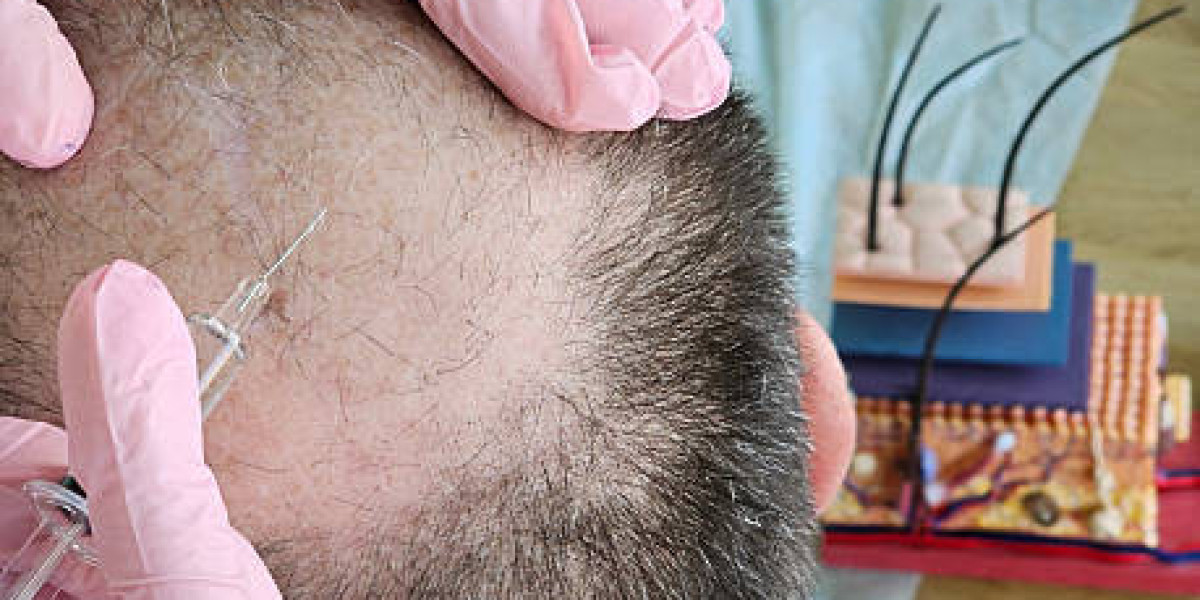

Scalp Micropigmentation in Dubai can create the visual impression of a more structured temple area by placing carefully matched scalp pigments where natural follicle points would normally appear. The technique does not grow new hair, but it can reduce the visible contrast between the scalp and surrounding hair while helping refine the perceived shape of a receding hairline.
Scalp Micropigmentation in Dubai for Receding Temples
Temple recession can change the apparent proportions of the entire hairline. Even when the frontal hairline still has reasonable density, deeper temple corners can make the forehead appear wider and the hairline more advanced than it may be when assessed from the front alone.
Scalp micropigmentation addresses this visual problem through controlled pigment placement rather than surgical grafting. A fine-needling device deposits medical-grade pigment into the scalp to reproduce the appearance of follicular points, with placement adjusted according to existing hair density, skin tone and the intended hairline design.
How Temple Recession Changes Hairline Appearance
The temples form the transition between the frontal hairline and the sides of the scalp. When this transition becomes too deep or irregular, simply adding pigment across the frontal area can produce an unnatural block-like appearance.
A technically planned approach considers:
- The depth of each temple recession
- Existing follicle distribution around the corners
- Frontal hairline shape
- Facial proportions
- Scalp and hair color contrast
- Density of surrounding hair
- Whether recession is symmetrical on both sides
The goal is not to create an artificially straight hairline. The pigment pattern should follow a believable follicular distribution and transition gradually into the patient's existing hair.
Why Temple Pigmentation Requires Precision
Temple areas have less horizontal space than broad crown or diffuse-thinning zones. Small changes in pigment position can therefore influence how the entire hairline is perceived.
The practitioner must control dot size, spacing, depth and pigment density. Overly dense placement can look solid rather than follicular, while excessive spacing may leave the original scalp contrast visible.
Scalp Micropigmentation in Dubai and Temple Hairline Planning
A receding temple should be assessed as part of the complete frontal hairline rather than treated as two isolated corners. The relationship between the temples, frontal hairline and existing hair density determines whether pigmentation will blend naturally.
Assessing the Existing Temple Structure
Before treatment, the scalp should be examined to determine whether the temples contain fine residual hairs, sparse follicles, scar tissue or completely exposed skin.
Residual hairs can provide valuable visual reference points. Pigmentation can then be planned around their direction and distribution instead of imposing a separate pattern over the area.
Matching Pigment to the Patient
Pigment selection is not based solely on hair color. Skin tone, scalp visibility, existing follicle contrast and the density of surrounding hair all influence the final appearance.
A professional treatment plan therefore considers the patient's individual characteristics before establishing pigment intensity. Tajmeels describes its SMP planning as being customized around factors including hair density, skin tone and facial features.
Designing the Temple Transition
The temple should normally transition gradually from the defined frontal region toward the side hair. A hard pigment boundary can make the treatment obvious, particularly when viewed from an angle.
Fine follicular points with controlled spacing can create a softer transition. The density can also be adjusted so that the treated area visually connects with the existing hair rather than appearing as a separate zone.
Temple Recession Patterns and SMP Planning
Different recession patterns require different pigment strategies. A treatment designed for mild corner recession should not automatically be applied to advanced temple loss.
| Temple presentation | Main visual issue | SMP planning consideration |
|---|---|---|
| Mild recession | Slightly widened corners | Subtle reinforcement around existing follicles |
| Moderate recession | Noticeable temple gaps | Gradual density transition |
| Deep recession | Large exposed areas | Broader but carefully blended coverage |
| Uneven recession | Asymmetrical hairline | Individualized temple mapping |
| Temple thinning | Scalp contrast through fine hair | Density-supporting follicular pattern |
| Post-procedure irregularity | Visible gaps or altered contours | Pattern matching with surrounding follicles |
The number of sessions can vary according to the area being treated, scalp condition and desired coverage. Tajmeels states that SMP commonly involves multiple sessions and that the treatment duration depends on the scalp condition and treatment area.
Scalp Micropigmentation in Dubai for Different Temple Hair Loss Levels
Temple pigmentation can be considered across different stages of recession, but the treatment objective changes as the exposed area becomes larger.
Mild Temple Recession
For mild recession, the focus may be on reducing the visual sharpness of the temple gap. Pigment can be introduced conservatively so that the original hairline remains the dominant feature.
This approach can be particularly useful when the patient does not want a dramatic change in hairline position.
Moderate Temple Recession
Moderate recession creates a more visible contrast between the hair and scalp. Here, the practitioner may need to build a broader follicular pattern while maintaining a natural transition into the frontal region.
The density should remain consistent with the surrounding hair. Increasing pigment density beyond the visual density of adjacent hair can make the temples appear artificially dark.
Advanced Temple Recession
With advanced recession, SMP may provide camouflage rather than biological restoration. The exposed scalp can be visually integrated with surrounding hair, but the procedure does not recreate living follicles.
This distinction matters when deciding between pigmentation and surgical hair restoration. Tajmeels describes SMP as a non-surgical alternative and separately compares it with hair transplantation, which involves grafting follicles.
Scalp Micropigmentation in Dubai Compared With Hair Transplantation for Temples
SMP and hair transplantation address temple recession through fundamentally different mechanisms.
| Consideration | Scalp micropigmentation | Hair transplantation |
|---|---|---|
| Mechanism | Pigment creates follicle-like visual points | Donor follicles are surgically transplanted |
| New hair growth | No | Yes, when grafts successfully establish |
| Incisions | No surgical incisions | Surgical procedure |
| Visible effect | Can be seen after treatment sessions | Develops progressively as transplanted hair grows |
| Maintenance | Periodic assessment and possible touch-ups | Long-term monitoring of hair and donor supply |
| Main purpose | Visual camouflage and hairline definition | Physical follicular restoration |
The appropriate option depends on the patient's donor supply, goals, degree of recession, willingness to undergo surgery and desired type of result. These treatments can also serve different roles within a broader hair-restoration plan.
Scalp Micropigmentation in Dubai for Temple and Hairline Integration
The most convincing temple result is usually determined by how well the treated area integrates with the rest of the scalp.
This is why assessment should extend beyond the two corners. The practitioner needs to examine the frontal hairline, temporal points, existing density and scalp visibility together.
For patients researching hair restoration options in Dubai, this broader assessment helps distinguish between a treatment intended to camouflage scalp visibility and one intended to restore actual hair growth.
Creating a Gradual Density Pattern
Temple pigmentation should rarely have one uniform density from the center of the hairline to the side of the head. Natural follicular distribution varies across these regions.
A graduated pattern can help reproduce that variation. More visible density may be appropriate toward areas of existing hair, while exposed transition zones can use more controlled spacing.
Considering Facial Proportions
Moving a temple visually forward changes the apparent width of the forehead. The design therefore needs to complement the patient's facial structure rather than simply minimize the amount of visible scalp.
A conservative temple shape can often preserve a believable mature appearance. Aggressively lowering or narrowing the hairline may create a result that does not correspond with natural age-related hairline patterns.
What the Scalp Micropigmentation Procedure Involves
SMP is performed using a fine-needling device to introduce pigment into the scalp. The treatment begins with scalp preparation and mapping, followed by controlled pigment placement across the selected areas.
A typical treatment sequence involves:
- Assessing the scalp and temple recession.
- Planning the intended hairline and transition zones.
- Cleaning and preparing the scalp.
- Selecting pigment appropriate to the individual's appearance.
- Applying follicle-like pigment points with controlled spacing.
- Reviewing symmetry and density.
- Adding further coverage during subsequent sessions where necessary.
- Providing scalp-specific aftercare instructions.
Tajmeels reports that an SMP session can take approximately three to six hours depending on the scalp condition and treatment area.
Dubai Climate and Temple SMP Aftercare
Dubai's climate adds practical considerations to scalp care. Strong sunlight and outdoor heat can increase exposure of treated scalp skin, while indoor air conditioning can contribute to a dry environment.
Protecting Treated Scalp From Sun
Direct sun exposure should be minimized during the initial healing period. Once the scalp has recovered, appropriate sun protection remains relevant because ultraviolet exposure can affect the appearance and longevity of cosmetic pigmentation.
Managing Heat and Sweat
Heavy sweating can make early aftercare more difficult, particularly for patients who exercise frequently or spend extended periods outdoors. Following the clinic's washing and activity restrictions gives the treated skin time to settle.
Adjusting for Air-Conditioned Environments
Dubai's extensive use of indoor air conditioning can create a noticeably dry environment. Patients should follow professional aftercare instructions rather than applying unfamiliar scalp products during the early healing phase.
Tajmeels advises patients to avoid rubbing or massaging the scalp, protect it from direct sunlight and follow specific washing instructions after treatment.
When Scalp Micropigmentation in Dubai May Not Be the Right Approach
SMP can camouflage visible scalp, but it cannot reverse active follicle miniaturization or produce new biological hair growth.
A consultation should therefore consider whether the patient's primary concern is:
- Active progressive hair loss
- Temple recession
- Visible scalp contrast
- Previous transplant scarring
- Diffuse thinning
- A preference for a non-surgical appearance change
- A desire for actual hair growth
Patients with active or unexplained hair loss may need the underlying condition assessed before deciding on cosmetic camouflage. The treatment objective should be established before pigment placement.
Setting Realistic Expectations for Temple SMP
A successful result depends on matching the treatment to the patient's existing hair pattern rather than attempting to recreate an idealized hairline.
Patients should understand that SMP can improve the visual definition of the temple region, but it does not create follicles, increase hair shaft thickness or stop the underlying biological process responsible for hair loss.
Tajmeels reports that visible improvement can be seen after the first session, while additional sessions may be used to build coverage and refine the result.
Questions to Ask Before Temple SMP
Can SMP completely rebuild receding temples?
No. It creates the appearance of follicular coverage but does not grow new hair.
Can the pigment blend with existing temple hair?
Yes, when pigment tone, spacing and density are planned around the patient's existing hair and scalp characteristics.
Is SMP suitable for deep temple recession?
It may provide visual camouflage, although the appropriate treatment depends on the size of the exposed area and the patient's expectations.
Will both temples receive identical treatment?
Not necessarily. Natural facial and hairline asymmetry may require individualized mapping on each side.
How many sessions are needed?
The number varies according to the treatment area, scalp condition, desired coverage and response to treatment.
The Strategic Investment in Temple Hairline Definition
Receding temples can be approached from a cosmetic-design perspective when the main concern is scalp visibility and hairline definition rather than new hair growth. Scalp Micropigmentation in Dubai uses controlled pigment placement to create follicle-like points and can be tailored to temple depth, surrounding density, skin tone and facial proportions.
For patients considering a personalized assessment, Tajmeels Clinic provides a Dubai-based setting for evaluating SMP alongside other hair-restoration approaches and determining whether temple camouflage aligns with the individual's goals.