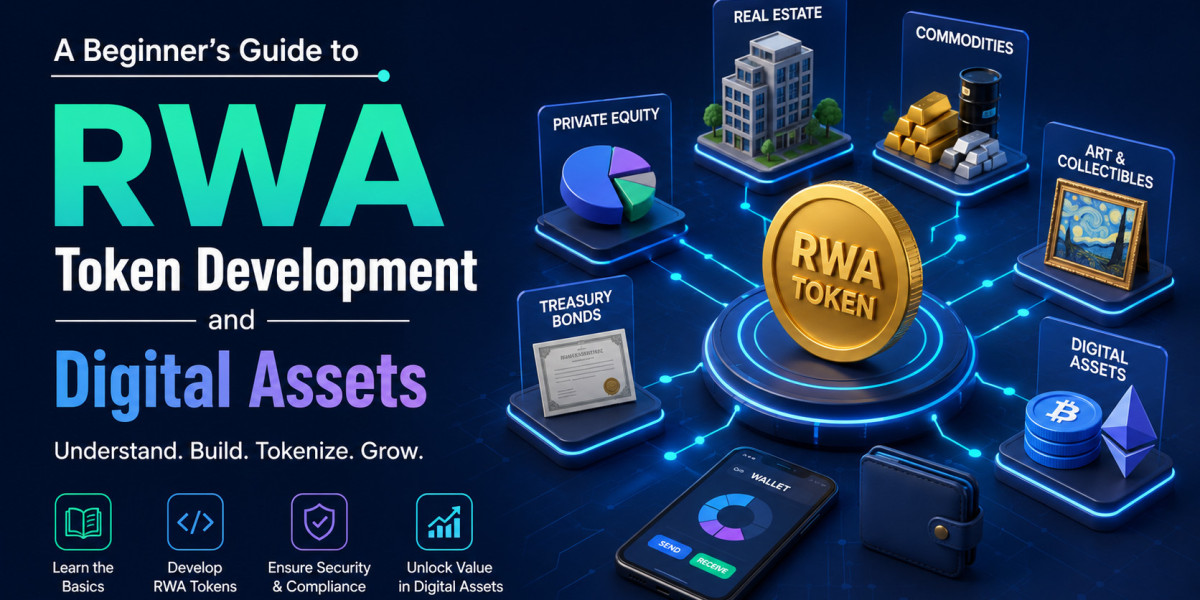

The digital asset market has expanded far beyond cryptocurrencies. Businesses, investors, financial institutions, and property owners are now looking at ways to represent real-world value through blockchain. This is where Real World Asset Tokenization has gained attention. It allows physical and financial assets such as real estate, invoices, commodities, artwork, bonds, and private equity to be represented as blockchain-based tokens.
For beginners, the concept may sound technical, but the idea is quite practical. Instead of dealing with lengthy paperwork and manual ownership records, asset ownership can be represented digitally while maintaining a connection with the actual asset. As industries continue to adopt blockchain for asset management, many organizations are considering RWA token development as part of their long-term digital strategy.
This guide explains the fundamentals of digital assets, how RWA Tokenization works, why businesses are adopting this approach, and the process involved in developing an asset-backed token. Whether you are an entrepreneur, investor, or enterprise decision-maker, understanding these concepts provides a good starting point before planning an RWA tokenization platform development project.
What Are Digital Assets?
Digital assets are items that exist electronically and carry measurable value. They may represent ownership, access rights, financial interests, or intellectual property.
Examples include:
Cryptocurrencies
Stablecoins
NFTs
Security tokens
Utility tokens
Asset-backed tokens
Tokenized real estate
Tokenized commodities
Among these categories, asset-backed tokens have become increasingly popular because they connect blockchain technology with real-world ownership.
Unlike cryptocurrencies that derive value mainly from market demand, asset-backed tokens represent physical or financial assets with measurable worth.
Understanding Real World Asset Tokenization
Real World Asset Tokenization refers to converting ownership rights of a physical or financial asset into digital tokens recorded on a blockchain.
Instead of transferring ownership through paper documents alone, ownership is represented digitally while remaining linked to the underlying asset.
Common assets suitable for tokenization include:
Residential properties
Commercial real estate
Gold
Silver
Fine art
Agricultural land
Corporate bonds
Treasury securities
Carbon credits
Private equity
Every token represents a defined ownership percentage or financial interest based on the rules established during RWA Tokenizaion development.
What Is RWA Token Development?
RWA token development is the process of creating blockchain-based tokens that represent ownership of real-world assets.
The process includes legal planning, blockchain selection, smart contract creation, compliance checks, token issuance, investor management, and ongoing administration.
A complete project usually includes:
Asset evaluation
Ownership verification
Legal documentation
Token structure
Smart contract development
Compliance integration
Investor onboarding
Wallet compatibility
Security testing
Token distribution
Businesses usually work with an experienced RWA tokenization development company to complete these activities efficiently.
Why Businesses Are Interested in Asset Tokenization
Businesses across multiple industries are adopting tokenized assets because traditional ownership systems often involve manual documentation, multiple intermediaries, and slower settlement procedures.
Some practical business advantages include:
Fractional Ownership
Large assets can be divided into smaller ownership units, making investments accessible to more participants.
Better Liquidity
Previously illiquid assets may reach a wider investor audience through digital marketplaces.
Faster Transactions
Blockchain records reduce paperwork involved in ownership transfers.
Global Participation
Qualified investors from different regions can participate according to local regulations.
Automated Income Distribution
Smart contracts can distribute rental income, dividends, or profit shares according to predefined conditions.
Types of Assets Used in RWA Tokenization
Different industries are finding suitable applications for tokenized assets.
Real Estate
Residential apartments
Commercial buildings
Hotels
Industrial properties
Land parcels
Precious Metals
Gold
Silver
Platinum
Rare metals
Financial Products
Corporate bonds
Government securities
Private funds
Debt instruments
Commodities
Agricultural products
Energy assets
Carbon credits
Natural resources
Alternative Investments
Art collections
Luxury watches
Collectibles
Wine collections
Music royalties
How Does RWA Token Development Work?
The development process follows several stages.
Step 1: Asset Selection
Everything starts with selecting an asset suitable for tokenization.
Factors considered include:
Market value
Ownership documentation
Legal status
Revenue generation
Investor interest
Step 2: Asset Verification
The ownership records must be verified.
This may include:
Property records
Financial statements
Asset inspections
Legal agreements
Valuation reports
Verification builds confidence among investors.
Step 3: Legal Structure
The ownership model must comply with local regulations.
This stage defines:
Ownership rights
Investor eligibility
Revenue sharing
Tax obligations
Compliance requirements
Step 4: Blockchain Selection
Different blockchain networks offer different benefits.
Popular options include:
Ethereum
Polygon
Solana
Avalanche
BNB Chain
The selection depends on project requirements, transaction costs, security expectations, and ecosystem support.
Step 5: Token Design
The token structure determines:
Total token supply
Ownership percentage
Investor rights
Distribution rules
Transfer permissions
Voting rights if applicable
Step 6: Smart Contract Development
Smart contracts define how tokens behave.
Typical functions include:
Token issuance
Ownership transfers
Dividend distribution
Compliance validation
Access control
Token burning when required
Step 7: Compliance Integration
Many projects include identity verification before investors can purchase tokens.
Compliance may involve:
KYC verification
AML screening
Accredited investor validation
Geographic restrictions
These features are commonly included within professional RWA tokenization development services.
Step 8: Token Launch
After testing, tokens become available for investors through approved platforms.
Ongoing monitoring continues after deployment.
Technology Behind RWA Tokenization
Several technologies work together during rwa tokenization platform development.
Blockchain Networks
Maintain ownership records across distributed systems.
Smart Contracts
Execute predefined actions automatically.
Digital Wallets
Store investor tokens securely.
Oracle Services
Connect blockchain applications with external information such as pricing and market data.
Identity Verification
Supports compliance with financial regulations.
Security Audits
Review smart contracts before deployment.
Industries Using RWA Token Development
Many sectors are adopting tokenized assets.
Real Estate
Property developers use tokenization to divide ownership into smaller investment units.
Banking
Banks evaluate tokenized securities for settlement and asset management.
Investment Firms
Private investment funds use blockchain for investor participation.
Agriculture
Land ownership and crop financing projects have started using digital tokens.
Energy
Renewable energy projects issue digital ownership interests linked to infrastructure investments.
Luxury Assets
Collectors use tokenization for artwork, watches, and rare collectibles.
Common Challenges in RWA Token Development
Although tokenization offers many opportunities, businesses should understand potential challenges.
Regulatory Compliance
Every country follows different financial regulations.
Asset Valuation
Accurate valuation is important before issuing tokens.
Custody
Physical assets require reliable custodians.
Smart Contract Security
Code should undergo extensive testing before deployment.
Investor Education
Many investors are still learning about tokenized ownership.
Working with experienced RWA Tokenization Services providers helps reduce project risks.
Choosing the Right RWA Tokenization Company
Selecting the right development partner plays an important role in project success.
Things to evaluate include:
Industry Experience
Review previous blockchain and tokenization projects.
Technical Knowledge
The company should understand blockchain networks, smart contracts, security testing, and digital asset management.
Compliance Knowledge
Financial regulations vary between jurisdictions.
Security Practices
Review their smart contract audit process.
Support Services
Long-term maintenance is equally important after token launch.
Many organizations compare multiple providers before selecting an RWA Tokenization Company for their project.
Best Practices Before Starting RWA Token Development
Businesses should prepare carefully before launching a project.
Recommended practices include:
Identify suitable assets.
Complete legal verification.
Define investor rights.
Select the blockchain carefully.
Prepare compliance documentation.
Conduct security audits.
Test smart contracts thoroughly.
Develop investor onboarding procedures.
Plan ongoing asset management.
Monitor regulatory developments.
These activities help reduce operational issues after launch.
Future Outlook for Digital Asset Tokenization
Financial institutions, investment firms, and enterprises continue evaluating blockchain for asset ownership and investment products. As regulations mature across different regions, tokenized assets are expected to become more common in real estate, commodities, private markets, and financial products.
Businesses are also looking beyond simple ownership tokens. Future projects may include automated income distribution, secondary market participation, asset lifecycle management, and integration with financial systems. As interest grows, demand for professional RWA tokenization development services and reliable implementation partners is expected to increase across multiple industries.
Conclusion
RWA token development provides a practical way to represent ownership of physical and financial assets on blockchain while maintaining a connection with real-world value. From property and commodities to bonds and private equity, tokenized assets are creating new investment opportunities and modernizing ownership records. Success depends on careful planning, legal compliance, secure smart contracts, and proper asset management from the beginning. Businesses entering this space should work with experienced professionals who understand both blockchain technology and financial regulations. Blockchain App Factory provides Real World Asset Tokenization Services, helping businesses plan, develop, and launch secure tokenization solutions that align with their business objectives and industry requirements.
FAQs
1. What is RWA Token Development?
RWA token development is the process of creating blockchain-based tokens that represent ownership or financial interest in real-world assets such as property, commodities, bonds, or other physical and financial assets.
2. Which assets can be tokenized?
Common examples include real estate, gold, silver, corporate bonds, government securities, artwork, agricultural land, carbon credits, private equity, and other valuable assets with verified ownership.
3. Why is Real World Asset Tokenization becoming popular?
It provides a digital method for representing ownership, supports fractional investment, improves asset accessibility, and simplifies record management while following applicable legal requirements.
4. What technologies are used in rwa tokenization platform development?
Projects commonly use blockchain networks, smart contracts, digital wallets, oracle services, identity verification systems, compliance tools, and smart contract security audits.
5. How long does an RWA token development project take?
The timeline depends on asset verification, legal documentation, blockchain selection, smart contract development, compliance reviews, testing, and deployment. Many projects take several weeks to a few months.
6. Why should businesses work with an RWA tokenization development company?
An experienced RWA tokenization development company can assist with blockchain architecture, legal planning, smart contract creation, compliance integration, security testing, token issuance, and ongoing technical support throughout the project lifecycle.