
Different workouts ask different things from your clothing. A heavy squat session, a treadmill walk, and a bench press workout may all happen in the same gym, but your lower body moves very differently in each one. That changes how much your track pants need to stretch.
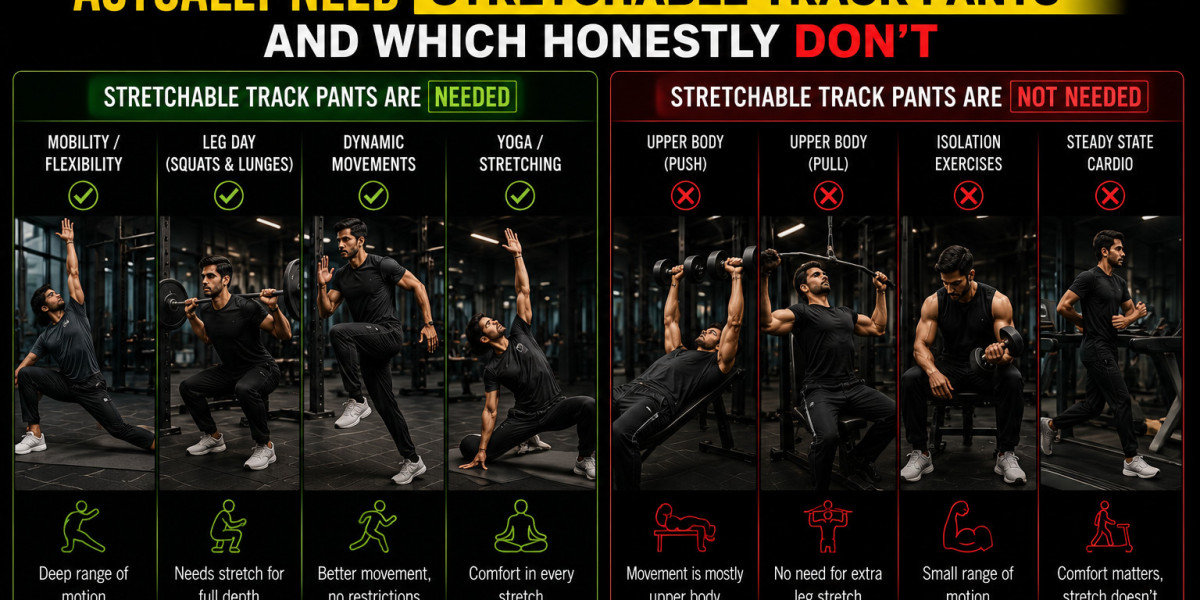
Chest day is a good example. Most of the time you're lying on a bench, adjusting dumbbells, or walking between stations. Fabric rarely reaches its limit. Compare that with a leg workout that includes deep squats, Bulgarian split squats, or walking lunges. Your hips, knees, and glutes keep moving through a much larger range, and that's where restrictive material starts becoming noticeable.
Here's the thing — many people assume every gym session requires maximum stretch. After training in commercial gyms across Delhi and Jaipur, that hasn't matched what I've seen. One small observation stands out: plenty of people only notice tight fabric after sitting on a bench between sets because the waistband shifts upward while the knees stay bent. It's a tiny detail, but it becomes surprisingly distracting during longer sessions.
Not Every Workout Puts the Same Demand on Your Pants
Upper-body focused workouts usually don't expose weaknesses in ordinary joggers. Shoulder presses, cable rows, biceps curls, and triceps work involve limited movement below the waist. Even a moderate amount of walking around the gym doesn't place much stress on the fabric.
Cardio tells a slightly different story depending on the machine. Walking on an incline treadmill or cycling at a steady pace generally works well with standard training pants. Sprint intervals, rowing, or agility drills introduce quicker direction changes, where some additional flexibility starts becoming useful without necessarily being essential.
Mobility work sits somewhere in between. Dynamic warm-ups, hip openers, and longer stretching routines often involve positions that many people never reach during strength training alone. Clothing that follows those movements instead of resisting them tends to feel less distracting over an entire session.
Where Regular Track Pants Are Fine and Where They Fall Short
For plenty of gym members, regular track pants remain a sensible choice. Someone training three evenings a week with mostly machines, light dumbbells, and twenty minutes of treadmill walking may never feel limited by standard fabric. Spending ₹700–₹1,000 on comfortable joggers often makes more financial sense than chasing premium stretch materials.
Limits usually appear once movement becomes deeper rather than heavier. Squatting below parallel, stepping onto high platforms, or holding mobility drills places pressure around the hip crease and behind the knees. Fabric that doesn't give much can create a pulling sensation even if the fit isn't particularly tight. That doesn't stop the exercise, but it can make every repetition feel slightly less natural.
Where Stretch Fabric Makes a Genuine Difference to Training
Leg-focused sessions make the biggest case for additional flexibility. Deep back squats, Romanian deadlifts, reverse lunges, high step-ups, and pigeon stretches all ask your clothing to move with your body instead of against it. During repeated sets, small restrictions become much easier to notice than they do during upper-body work.
Fast-paced hybrid sessions also benefit. Moving from lunges straight into short sprints or burpees means your clothing needs to respond without constantly needing adjustment between exercises.
The stretchable track pants for gym range from AllOfficials is worth exploring if you want something designed around Indian training conditions.
When Paying Extra for Stretch Isn't Worth It
Higher prices don't automatically improve every workout. If most of your week revolves around bench presses, seated cable rows, chest-supported machines, or moderate cardio, you'll probably notice waistband comfort, breathable fabric, and secure zip pockets long before you notice extra elasticity.
Honestly, many budget-friendly joggers already cover those basics well. Spending an additional ₹800–₹1,500 purely for stretch may not provide enough real-world value unless your sessions regularly include demanding lower-body work or dedicated mobility practice. For plenty of office-goers squeezing in evening workouts, comfort during the commute home might matter just as much as movement inside the squat rack.
Matching Your Kit to How You Actually Train
Buying activewear becomes easier once you stop treating every workout the same. Someone preparing for a half marathon will prioritise different features than someone following a powerlifting routine. Yoga-gym crossover training also creates different clothing demands compared with traditional bodybuilding splits.
Rather than replacing everything, many people gradually build a rotation based on training days. One dependable pair for heavy leg sessions and another for lighter workouts often covers most weekly routines without unnecessary spending.
The Gym Collection from AllOfficials is a practical place to start building the rest of your kit.
Frequently Asked Questions
Q: Do stretchable track pants actually make a noticeable difference for leg day training?
A: For deep squat, lunge, and Romanian deadlift patterns, yes. Four-way stretch removes much of the resistance and pulling sensation that standard track pants can create around the hip crease and behind the knees during full-range movements.
Q: Is stretch fabric necessary for someone who mainly does upper body training at the gym?
A: Not particularly. Upper-body workouts rarely challenge the fabric the way deep leg exercises do. If your routine focuses mainly on presses, rows, and machine work, waistband comfort, breathability, and secure pockets usually deserve higher priority.
Q: How much spandex content is actually needed for most Indian gym-goers?
A: Around 5% to 8% spandex is enough for most gym routines. Levels above 10% become more useful for yoga crossover, gymnastics, or high-intensity sessions involving frequent movement in multiple directions.
Final Thoughts
Choosing the right gym joggers starts with looking honestly at how you train rather than buying the most technical option available. Plenty of people in Mumbai, Bengaluru, or Pune spend most of their gym time on machines or upper-body exercises, where standard training pants perform perfectly well.
Extra flexibility earns its place during deeper movement patterns, mobility sessions, and demanding lower-body workouts. Matching your clothing to those demands usually delivers better value than simply paying more for features that may never get used.