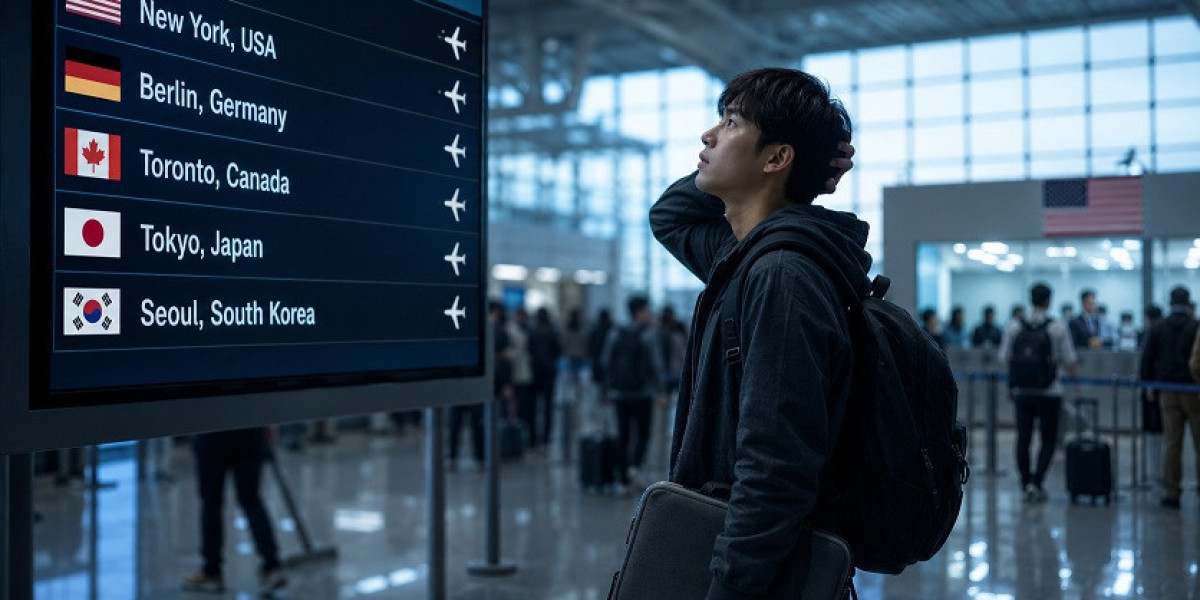

When people discuss international education, they usually focus on tuition fees, university rankings, and graduate salaries. Those factors still matter. But in 2026, another issue has quietly moved to the center of the conversation: uncertainty.
For thousands of Asian students considering an American degree, the challenge is no longer simply getting accepted into a university. The bigger challenge is understanding what happens after acceptance. Will visa appointments be available? Will work opportunities remain the same after graduation? Will future policy changes affect long-term plans?
These questions are changing how students evaluate the United States and are creating costs that never appear in official tuition figures. According to recent research, visa uncertainty is influencing not only enrollment decisions but also students' mental health, academic choices, and career ambitions.
The Cost Nobody Includes in University Brochures
Universities are good at explaining tuition, accommodation, and living expenses.
What they cannot easily quantify is the emotional cost of uncertainty.
Many Asian students now report feeling anxious about issues that previous generations rarely considered. Concerns about visa status, policy changes, and future work opportunities create a constant background pressure. Research cited in the source report found widespread fears about maintaining legal status and concerns about unexpected disruptions to academic plans.
Imagine trying to focus on final exams while wondering whether a future immigration decision could affect your entire career. That kind of uncertainty changes the educational experience itself.
For some students, the pressure becomes significant enough to influence everyday decisions, from travel plans to extracurricular activities and professional networking opportunities.
Career Planning Has Become More Complicated
A university degree is often viewed as an investment.
Students spend years and substantial amounts of money because they expect future career opportunities to justify those costs. When post-study work pathways become less predictable, calculating return on investment becomes much harder.
Many Asian students traditionally chose the United States because of the combination of strong universities and access to work opportunities through OPT and related pathways. Today, concerns about future restrictions have made students more cautious about committing to that route.
Some are even adjusting their academic interests accordingly. Fields connected to sensitive technologies or research areas may attract additional scrutiny, leading students to reconsider subjects they would otherwise have pursued.
The result is a subtle but important shift. Students are no longer choosing majors based solely on passion or career demand. Increasingly, they are factoring immigration risk into those decisions.
Families Are Thinking Differently About Study Abroad
Parents often play a major role in international education decisions.
In previous years, families frequently viewed admission to an American university as a clear sign of success. Today, many are asking more practical questions.
How stable is the visa system? What happens if processing delays occur? Are there countries that offer similar educational quality with fewer uncertainties?
As a result, destinations across Europe and Asia are benefiting. Countries such as Germany, Ireland, Singapore, Japan, and South Korea are attracting students who value predictability alongside academic quality. For many families, confidence in future plans has become just as important as university reputation.
This trend explains why students are increasingly applying to multiple countries instead of concentrating all their efforts on a single destination.
Academic Strength Is Becoming a Safety Net
One lesson stands out from the changing environment: strong academic performance creates options.
Students with excellent grades, valuable skills, and strong professional profiles can adapt more easily when policies change. They have more opportunities to transfer, apply for scholarships, compete for jobs, or pursue education in alternative countries.
That is why many international students are investing additional effort into academic preparation. Platforms like Expertsmind.com that connect learners with experienced tutors can help students master challenging subjects, improve coursework quality, and maintain the academic standards needed to stay competitive in a rapidly changing global education market.
Academic success cannot eliminate policy uncertainty, but it can increase the number of opportunities available when circumstances shift.
A New Definition of Study-Abroad Success
The traditional study-abroad formula was simple: gain admission to a respected university, earn a degree, and launch a career.
The reality in 2026 is more complex.
Students now evaluate countries, not just campuses. They compare immigration systems, work rights, safety, affordability, and long-term stability alongside academic rankings. They create backup plans and consider multiple destinations before making a final choice.
This does not mean the United States has lost its appeal. American universities remain among the world's most respected institutions. What has changed is the way students assess risk.
The hidden cost of uncertainty is forcing students to think more strategically than ever before. Those who succeed will not necessarily be the ones who choose the most famous university. They will be the ones who choose the path that best balances opportunity, stability, and long-term goals.