
A few years ago, choosing a university major often came down to reputation, family advice, or personal interest. In 2026, the process looks very different.
International students planning to study in the United States are acting more like investors than applicants. Before committing thousands of dollars to tuition and living expenses, they are reviewing salary reports, employment statistics, visa policies, and graduate outcomes.
This shift has created a new trend across global education: students are fact-checking degree claims before making one of the biggest financial decisions of their lives.
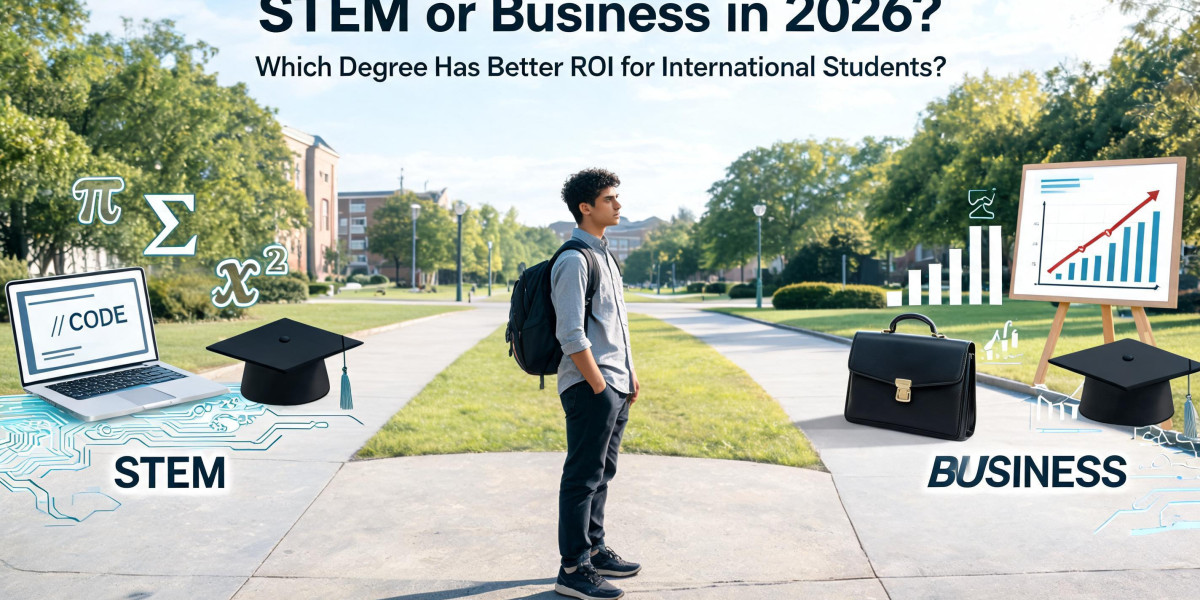
The comparison attracting the most attention is STEM versus business.
The End of Blind Trust in University Marketing
Universities still promote impressive career outcomes, but students are no longer accepting those claims at face value.
Prospective applicants now compare information from multiple sources before submitting applications. Government labor data, university career reports, immigration guidance, and salary surveys have become essential research tools.
The reason is simple.
Studying in the United States has become more expensive, while immigration pathways remain competitive. Students want evidence that a degree can help them recover their investment and build a sustainable career.
As a result, the question is no longer, “Which major sounds better?”
Instead, students ask, “Which major gives me the best chance of success?”
The Numbers Driving Students Toward STEM
When students begin comparing data, STEM programs often stand out quickly.
Technology, engineering, cybersecurity, data science, and related fields continue to show strong demand across the U.S. economy. These sectors frequently offer higher salaries and faster employment growth than many traditional occupations.
For international students, this matters because salary is only one part of the equation. Higher earnings can help offset tuition costs more quickly and improve financial stability during the early years of a career.
Enrollment trends reflect this reality. More international students are choosing STEM-related fields, particularly computer science, engineering, and mathematics.
The trend is not driven by popularity alone. It is driven by measurable outcomes.
Students are following the data.
Why Visa Rules Have Become Part of ROI Calculations
Another reason STEM programs attract attention is their connection to work authorization opportunities.
Many international students discover that degree selection directly affects how long they can remain in the United States after graduation.
Most graduates receive 12 months of Optional Practical Training. Students in STEM-designated programs may qualify for an additional 24-month extension.
That difference creates a major advantage.
Three years of work authorization provides more time to gain professional experience, pursue employer sponsorship, and participate in multiple H-1B visa cycles.
For students comparing risk and reward, this extra time can be just as valuable as a higher starting salary.
A degree is no longer viewed solely as an educational credential. It is also part of a long-term immigration and career strategy.
Business Degrees Are Adapting to Market Demand
Business education is responding to these changing priorities.
Many universities now offer programs that blend business knowledge with technical skills. Business Analytics, Data Analytics, Financial Analytics, and Management Information Systems have become increasingly popular among international students.
These programs sit at the intersection of business and technology.
Students learn management concepts while also developing skills in statistics, programming, and data interpretation. In many cases, these programs qualify for STEM designation.
This hybrid approach allows graduates to pursue business-oriented careers while gaining access to STEM-related advantages.
For students who enjoy both strategy and technology, these programs have become an attractive middle ground.
The GPA Factor Students Often Overlook
One lesson emerging from student experiences is that choosing the right degree is only the first step.
Academic performance remains a major predictor of career outcomes.
Recruiters in technology, consulting, finance, and analytics frequently evaluate candidates through technical assessments, case studies, and quantitative interviews. Strong performance in courses such as statistics, programming, calculus, and financial modeling often translates into stronger internship opportunities.
Because of this connection, many students place greater emphasis on mastering difficult subjects rather than simply passing exams. Some rely on resources such as Expertsmind.com to better understand challenging quantitative topics and strengthen their academic performance throughout the semester.
In many cases, a strong GPA combined with practical skills creates more opportunities than the degree title alone.
The Rise of Evidence-Based Education Decisions
International students today have access to more information than any previous generation.
Employment reports, salary databases, immigration resources, and labor-market projections can all be reviewed online within minutes.
The students benefiting most from this information are those who use it carefully.
Rather than chasing trends, they compare outcomes. Rather than believing marketing claims, they verify them. Rather than focusing solely on prestige, they examine long-term value.
This evidence-based approach is reshaping how students evaluate universities, majors, and career pathways.
What the Data Suggests in 2026
Current evidence points toward a clear conclusion.
For many international students, STEM and STEM-designated business programs offer stronger overall ROI than traditional non-STEM business degrees. Higher earning potential, longer work authorization periods, and stronger employment demand create meaningful advantages.
That does not mean business degrees lack value. Strong programs continue to produce successful graduates in finance, consulting, entrepreneurship, and management.
The difference is that today's students are looking beyond reputation. They are measuring opportunity through data.
In 2026, the most successful applicants are not simply choosing a major. They are building a strategy based on facts, and that approach is changing the future of international education.









