
In the demanding landscape of industrial and automotive maintenance, the timing belt is often a "silent" component—until it fails. For B2B procurement managers and fleet engineers, a snapped belt isn't just a mechanical issue; it represents significant downtime, lost revenue, and potential total engine replacement. While many introductory guides focus on simple replacement intervals, the real challenge lies in diagnosing the underlying system stressors that lead to premature wear.
Timing belt kits are precision-engineered systems. When one component—be it the idler, the tensioner, or the belt itself—deviates from its performance spec, the entire drivetrain is compromised. Understanding the physics of synchronous belt drives is essential for ensuring long-term operational reliability and high information gain for your technical team.
Diagnosing the Root Causes of Synchronous Drive Failure
Most timing belt issues are symptoms of broader mechanical imbalances. To provide a feasible solution, we must first look at the technical failure points that standard maintenance schedules might overlook:
Tensioner Damping Loss: The hydraulic or mechanical tensioner is responsible for maintaining constant pressure despite thermal expansion. If the internal damping fluid leaks or the spring fatigues, the belt will "whip" at high RPMs, leading to tooth shear.
Pulley Misalignment: Even a 0.5-degree deviation in pulley alignment can cause uneven edge wear. This is frequently seen in aftermarket installations where the mounting surfaces weren't properly cleaned or torqued to specification.
Contamination Seepage: Oil or coolant leaks from cam seals or water pumps can chemically degrade the HNBR (Hydrogenated Nitrile Butadiene Rubber) compounds of the belt, causing it to soften and slip.
The Solution: A System-Centric Replacement Protocol
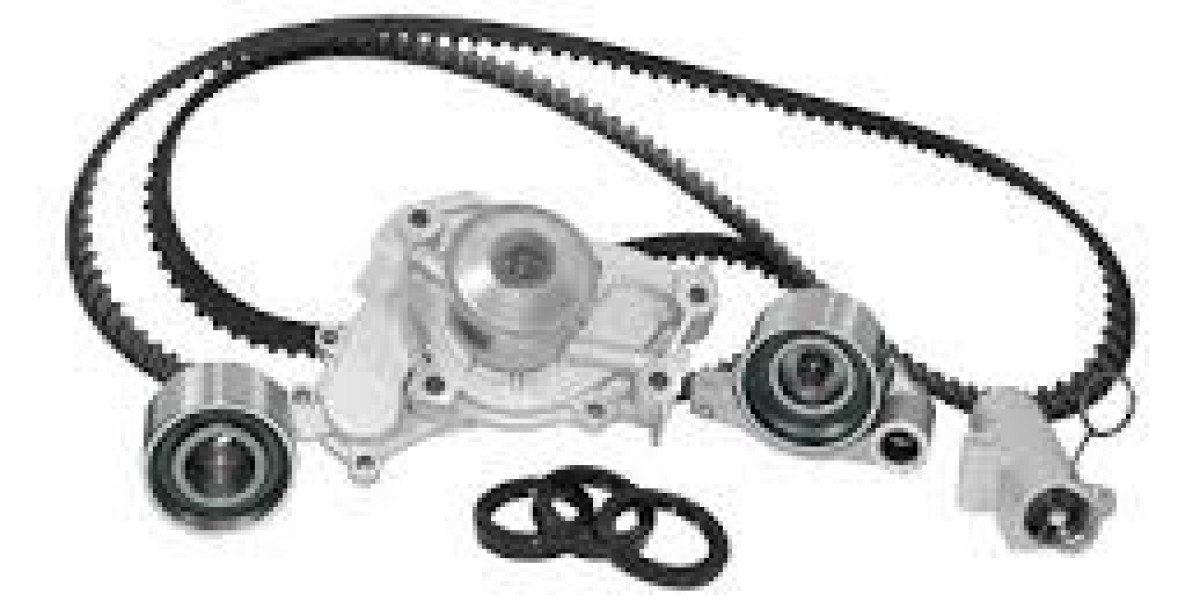
Replacing only the belt is a high-risk strategy that ignores the interconnectivity of the drivetrain. A truly valuable and feasible solution involves a "Total System Refresh" using a complete timing belt kit.
1. Precision Component Matching
Using a comprehensive kit ensures that the tensioner and idler pulleys share the same wear lifecycle as the belt. At NMR Bearing, we emphasize that the interaction between the bearing race of the pulley and the belt’s profile must be seamless. Mismatched components from different production batches can lead to harmonic vibrations that shorten the system's lifespan.
2. Advanced Synchronization Calibration
During installation, using specialized locking tools rather than manual marking is critical. Modern interference engines have such tight tolerances that being off by a single tooth can result in valve-to-piston contact. A technical solution must include a post-installation "crankshaft rotation test" to verify that the tensioner’s pointer remains within the optimal range through two full cycles.
3. Environmental Sealing Verify
A feasible long-term solution includes replacing the water pump and front engine seals during the timing belt service. Since these components are accessible once the timing cover is removed, this prevents future labor costs and protects the new belt from chemical contamination.
Implementation Checklist for Maintenance Managers
To ensure your timing belt kits provide maximum ROI, follow this technical verification list:
Visual Inspection: Check for "glazing" on the back of the belt, which indicates a seized idler pulley.
Acoustic Testing: Listen for high-pitched whining, a classic sign of an over-tightened belt stressing the bearing journals.
Torque Verification: Always use a calibrated torque wrench on tensioner bolts to prevent thread stripping in aluminum engine blocks.
Conclusion
The reliability of a B2B drivetrain relies on more than just a scheduled belt swap; it requires a deep understanding of the synchronous drive environment. By utilizing complete timing belt kits and adhering to precision installation protocols, businesses can eliminate the risk of catastrophic engine failure and optimize fleet uptime. Investing in high-quality components and technical expertise today prevents the exponential costs of mechanical downtime tomorrow. For those managing high-performance industrial or automotive assets, the "system-first" approach is the only path to sustained operational excellence.