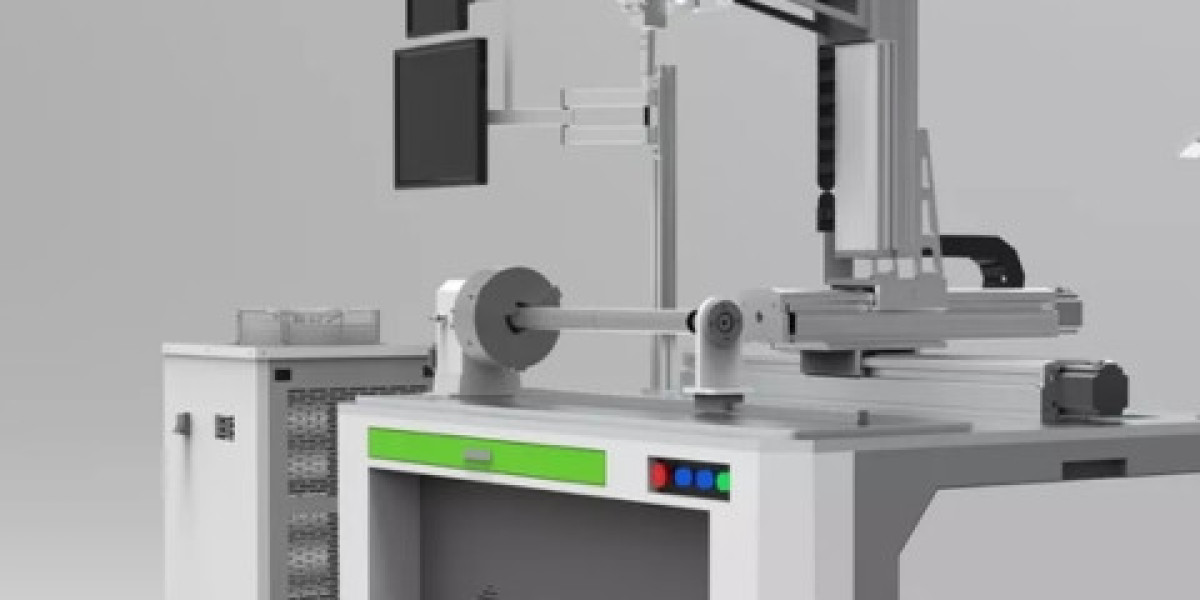

Modern metal fabrication requires equipment that can deliver accurate, consistent, and clean welding results across different applications. As manufacturers look for better ways to improve production quality while controlling operating costs, laser welding technology has become an increasingly important solution. A fiber optic laser welder provides a focused welding process that can be used for a wide range of metals, components, and industrial projects.
From workshops and automotive production to machinery manufacturing and customized metal fabrication, this technology offers a practical approach to creating strong and precise welds. Its combination of concentrated laser energy, controlled operation, and flexible application makes it suitable for businesses that want to modernize their welding processes.
Understanding Fiber Optic Laser Welding
A fiber optic laser welder uses a laser beam delivered through an optical fiber to the welding head. The beam is concentrated onto a specific area of the workpiece, creating enough heat to melt the metal and form a welded joint. Because the energy is highly concentrated, the welding process can be carefully controlled.
Unlike conventional welding processes that may use an electrical arc or flame as the primary heat source, fiber laser welding focuses energy into a smaller working area. This allows operators to work with precision when joining components, repairing parts, or fabricating finished products.
The technology can be configured for different production environments, including manual, handheld, and automated welding systems.
Why Fiber Laser Technology Is Used in Welding
The growing use of fiber laser technology in manufacturing is connected to the demand for accurate and repeatable production. Many industries work with metal components that require controlled welding with clean joint formation.
A fiber optic laser welder can direct energy precisely where it is required. This is particularly useful when working with components that have detailed shapes, narrow joints, or surfaces where excessive heat could affect the surrounding material.
The controlled welding process can also help manufacturers maintain consistent production standards when the same type of component needs to be welded repeatedly.
Metals Commonly Used With Fiber Optic Laser Welders
Fiber laser welding systems can be used with several common industrial metals, depending on the machine configuration, laser power, material thickness, and application requirements.
Stainless steel is widely used in fabrication because of its durability and corrosion resistance. Fiber laser welding can be applied to stainless-steel components used in machinery, kitchen equipment, architectural products, and industrial assemblies.
Carbon steel is another common material for laser welding. Manufacturers can use suitable welding parameters to join different carbon-steel components used in fabrication and equipment production.
Aluminum can also be processed with appropriate laser settings. Since aluminum has different thermal properties from steel, proper parameter selection is important for producing a controlled weld.
Other applications may involve galvanized materials, copper alloys, titanium, and specialized metals. Before production, manufacturers should verify material compatibility and establish appropriate welding parameters for the specific application.
Applications Across Modern Industries
A fiber optic laser welder can serve many manufacturing and fabrication requirements. The technology is especially useful where precision and controlled heat input are important.
Automotive Manufacturing
Automotive production involves numerous metal components that require reliable joining. Laser welding can be used for brackets, structural components, body parts, exhaust-related components, and other assemblies.
The focused welding process can support accurate joining of components while helping manufacturers maintain repeatable production quality.
Metal Fabrication Workshops
Fabrication workshops often handle different projects and material types. A fiber optic laser welder can provide flexibility for producing metal frames, cabinets, enclosures, equipment parts, and customized components.
Handheld systems can be particularly useful for workshops that need to move between different workpieces instead of operating a fixed automated production line.
Machinery Manufacturing
Industrial machinery frequently contains welded metal structures and components. Precise welding can help manufacturers produce assemblies according to specific dimensions and production requirements.
Laser welding can be incorporated into the fabrication of machine housings, brackets, frames, covers, and other metal parts.
Stainless-Steel Products
Manufacturers producing stainless-steel furniture, kitchen equipment, decorative structures, and industrial products can use fiber laser welding for controlled joining.
The ability to focus the laser beam on a defined area is valuable for applications where the finished appearance of the weld is important.
Electronics and Small Components
Some electronic and precision components require controlled welding with limited heat exposure. With suitable equipment and parameters, fiber laser technology can be adapted for smaller metal parts and detailed assemblies.
Handheld Fiber Laser Welding
Handheld laser welding systems have become popular among businesses looking for greater flexibility. Instead of placing every workpiece inside a fixed automated system, an operator can guide the welding head manually.
A handheld fiber optic laser welder can be useful for large workpieces, customized fabrication, repair work, and low-to-medium production volumes. Operators can move around the workpiece and access areas that may be difficult to position within a conventional welding setup.
For workshops handling different product sizes, this flexibility can make laser welding easier to integrate into everyday production.
Choosing the Appropriate Laser Power
Laser power is an important consideration when selecting welding equipment. The correct power depends on factors such as material type, thickness, joint design, welding speed, and production requirements.
Lower-power systems can be suitable for thinner sheet materials and precision applications, while higher-power systems may be selected for thicker materials and demanding production environments.
Manufacturers should avoid choosing a machine based only on maximum laser power. The complete application should be evaluated, including the material, thickness, desired weld penetration, production volume, and available workspace.
Welding Different Joint Designs
A fiber optic laser welder can be used with different joint configurations depending on the workpiece design. Common welding arrangements include butt joints, lap joints, corner joints, and other customized configurations.
Joint preparation remains important for achieving reliable results. Proper alignment, clean surfaces, suitable gaps, and appropriate welding parameters all contribute to the quality of the finished joint.
Before beginning large-scale production, operators should test the selected settings on representative samples.
Preparing Metal Before Welding
Surface preparation plays an important role in laser welding. Dirt, oil, oxidation, coatings, and other contaminants can influence welding performance.
Cleaning the workpiece before welding can help create more consistent results. The preparation method depends on the material and the type of contamination present.
Correct positioning is equally important. Components should remain stable during welding so that the laser beam follows the intended welding path accurately.
Operating a Fiber Optic Laser Welder Safely
Laser welding equipment should always be operated according to the manufacturer's safety instructions. Laser radiation can create serious hazards, so appropriate protective measures are essential.
Operators should use the required laser safety equipment and work in an appropriately controlled environment. Welding fumes and gases should also be managed through suitable ventilation or extraction systems.
Training is important before an operator begins production work. Understanding machine controls, material settings, safety procedures, maintenance requirements, and emergency protocols helps create a safer workplace.
Maintaining Welding Equipment
Regular maintenance helps keep a fiber optic laser welder operating consistently. Operators should follow the manufacturer's recommended maintenance schedule and inspect relevant components regularly.
The welding head, protective optics, cooling system, cables, and other components should be checked according to the equipment's specifications. Optical components require particular attention because contamination or damage can influence beam delivery and welding performance.
Keeping the work environment clean can also reduce the risk of dust and contaminants affecting sensitive equipment.
Integrating Laser Welding Into Production
Businesses planning to introduce fiber laser welding should first evaluate their existing production workflow. Consider the types of materials being welded, average material thickness, daily production volume, operator experience, and available workspace.
A suitable machine can then be selected according to these requirements. For businesses producing customized products, a flexible handheld system may be appropriate. Larger manufacturers may consider automated or robotic laser welding solutions for repeatable high-volume production.
Proper parameter testing and operator training should be included when introducing the technology.
The Future of Fiber Laser Welding
Manufacturing continues to move toward more precise and efficient production technologies. Fiber laser welding is positioned within this development because it can support controlled welding across a variety of industrial applications.
As equipment becomes more accessible and easier to operate, more workshops and manufacturers can consider laser welding for their production requirements. Automation, digital controls, improved beam delivery, and application-specific welding systems are also expanding the ways manufacturers can use laser technology.
Final Thoughts
A fiber optic laser welder provides manufacturers and fabrication professionals with a modern method for joining metal components with controlled laser energy. From stainless-steel products and automotive components to machinery, customized fabrication, and precision assemblies, the technology can be adapted to many different production requirements.