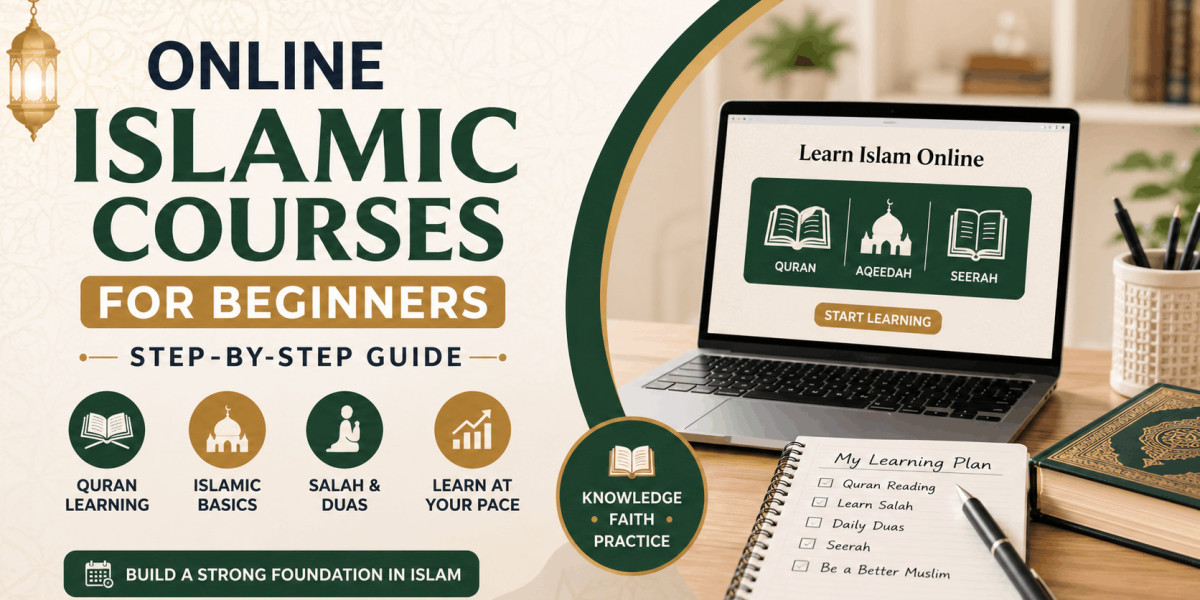

Learning about Islam is a lifelong journey, and every great journey begins with a single step. Thanks to modern technology, anyone can now start learning from the comfort of their home through Online Islamic Courses for Beginners. Whether you are a new Muslim, someone reconnecting with your faith, or a parent looking for structured Islamic education for your child, online learning provides a flexible and effective way to build a strong foundation in Islam.
In this step-by-step guide, you'll discover how to choose the right course, what subjects to begin with, and how to stay consistent in your learning journey.
Why Choose Online Islamic Courses?
The internet has transformed education, making Islamic knowledge more accessible than ever before. Online Islamic Courses for Beginners allow students to learn at their own pace while receiving guidance from qualified teachers around the world.
Some of the biggest advantages include:
Learn from home without traveling.
Flexible schedules for students and working professionals.
One-on-one or group classes based on your preference.
Access to experienced and qualified Islamic scholars.
Interactive lessons with recorded sessions for revision.
These benefits make online learning ideal for beginners who want to start gradually without feeling overwhelmed.
Step 1: Define Your Learning Goals
Before enrolling in any course, ask yourself what you want to achieve.
Your goals may include:
Learning to read the Quran correctly.
Understanding the basics of Islam.
Memorizing short Surahs.
Learning daily Duas.
Studying Islamic manners and etiquette.
Understanding the life of Prophet Muhammad (peace be upon him).
Having clear goals helps you choose the most suitable Online Islamic Courses for Beginners and keeps you motivated throughout your studies.
Step 2: Start with the Basics
Many beginners make the mistake of jumping into advanced topics too early. Instead, build a solid foundation by learning:
Quran Reading
If you cannot read Arabic, start with Noorani Qaida or basic Arabic pronunciation. Proper pronunciation (Tajweed) is essential for reading the Quran correctly.
Basic Aqeedah (Beliefs)
Learn the six pillars of faith and understand the core beliefs of Islam.
Salah (Prayer)
Study how to perform Wudu, learn the daily prayers, and understand their meanings.
Islamic Manners
Islam emphasizes honesty, kindness, patience, respect, and good character. These values should be part of every beginner's education.
The best Online Islamic Courses for Beginners combine all these foundational topics into a structured learning program.
Step 3: Choose Qualified Teachers
A knowledgeable and experienced teacher can make learning enjoyable and easy.
When selecting an online academy, consider:
Qualified Islamic instructors.
Experience teaching beginners.
Interactive classes.
Positive student reviews.
Personalized learning plans.
Progress tracking and assessments.
Learning from authentic sources ensures you receive correct Islamic knowledge based on the Quran and Sunnah.
Step 4: Create a Consistent Study Schedule
Consistency is more important than studying for long hours occasionally.
Try these simple habits:
Study 20–30 minutes every day.
Practice Quran reading regularly.
Revise previous lessons before starting new ones.
Take notes during class.
Ask questions whenever something is unclear.
Most Online Islamic Courses for Beginners are designed with flexible scheduling, making it easier to maintain a regular routine.
Step 5: Practice What You Learn
Islam encourages both knowledge and action.
As you progress through your lessons:
Apply Islamic manners in daily life.
Practice your prayers consistently.
Recite the Quran every day.
Memorize one Dua each week.
Share beneficial knowledge with family and friends.
Putting knowledge into practice strengthens understanding and builds lifelong habits.
Step 6: Stay Motivated
Every learner experiences challenges. You may struggle with Arabic pronunciation, memorization, or time management. This is completely normal.
Stay motivated by:
Setting small weekly goals.
Celebrating your progress.
Joining supportive online learning communities.
Remembering that seeking knowledge is an act of worship.
Asking your teacher for additional guidance whenever needed.
The journey becomes easier when you focus on steady improvement rather than perfection.
What Should a Beginner's Course Include?
When comparing Online Islamic Courses for Beginners, look for a curriculum that includes:
Quran reading with Tajweed.
Basic Arabic letters and pronunciation.
Daily Duas.
Pillars of Islam.
Pillars of Iman.
Seerah (Life of Prophet Muhammad, peace be upon him).
Basic Fiqh (purification and prayer).
Islamic ethics and character.
Regular quizzes and progress evaluations.
A well-rounded curriculum helps beginners develop both knowledge and confidence.
Tips for Choosing the Best Online Islamic Academy
Not all online academies offer the same quality of education. Before enrolling, check whether the academy provides:
Qualified male and female teachers.
Free trial classes.
Affordable pricing.
Flexible class timings.
Individual attention.
Secure online learning platform.
Certificates upon course completion.
Reading testimonials and reviews from previous students can also help you make an informed decision.
Final Thoughts
Starting your Islamic learning journey has never been easier. With the availability of Online Islamic Courses for Beginners, students of all ages can gain authentic Islamic knowledge from experienced teachers without leaving their homes.
The key to success is beginning with the basics, choosing a trustworthy academy, maintaining a consistent study routine, and applying what you learn in your daily life. Every lesson you complete brings you closer to a deeper understanding of your faith and strengthens your relationship with Allah.
Remember, Islamic learning is not about rushing through lessons—it is about building a strong foundation that lasts a lifetime. By taking one step at a time and remaining committed to your studies, Online Islamic Courses for Beginners can become the perfect gateway to a meaningful and rewarding journey of Islamic knowledge.