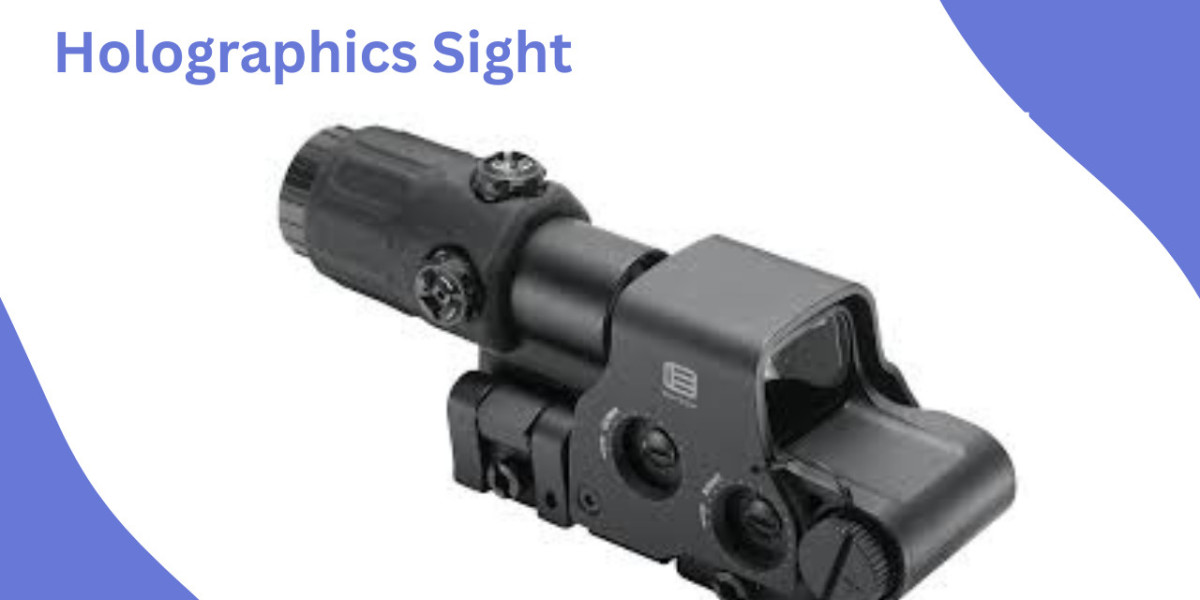

Modern optical targeting systems demand high speed, precision, and clarity to perform effectively in real-world environments. However, many users and industries still face challenges caused by unstable optics, weak brightness control, and alignment issues in advanced sighting systems. These limitations can reduce accuracy and impact operational efficiency in both professional and industrial applications.
One advanced solution widely used in modern optical systems is the Holographic sight. This technology improves targeting speed by projecting a holographic reticle onto the viewing field, allowing users to maintain focus on both the target and the environment simultaneously. Despite its advantages, many manufacturers still struggle with issues such as battery efficiency, optical distortion, and durability under harsh conditions. Understanding these challenges is essential for businesses developing optical systems to improve product reliability and meet increasing performance expectations.
Why Holographic Sight Technology Matters
A holographic sight is an advanced optical aiming system that uses laser-based holography to project a reticle image into the user’s field of view.
Unlike traditional optical sights, holographic systems allow faster target acquisition because the reticle remains fixed even if the user’s eye position shifts.
This technology is widely used in tactical optics, law enforcement tools, sport shooting equipment, and professional observation systems.
Holographic sights are valued for their speed, accuracy, and ability to perform well in dynamic environments.
As optical technology continues evolving, demand for faster and more reliable targeting systems is increasing across multiple industries.
Common Problems Businesses Face With Holographic Sight Systems
High Power Consumption
One of the main challenges in holographic sight systems is battery drain due to continuous laser projection.
Since holographic reticles require constant energy, poor power optimization can reduce operational runtime.
This becomes a major limitation for long-duration field operations.
Manufacturers are now focusing on energy-efficient laser systems and improved power management circuits.
Optical Brightness Limitations
Some holographic sights struggle to maintain optimal brightness in extreme lighting conditions.
Weak brightness control can reduce reticle visibility in bright outdoor environments.
Advanced optical calibration and adaptive brightness systems help improve visibility performance.
Durability and Environmental Stress
Holographic sights are often used in harsh environments where vibration, impact, and temperature changes are common.
Poor structural design may lead to misalignment or internal damage over time.
High-quality housing materials and reinforced optical assemblies improve durability.
Internal Reflection and Distortion
Improper optical design can lead to internal reflections or image distortion inside the sighting system.
This affects reticle clarity and reduces targeting precision.
Precision optical engineering and anti-reflective coatings help solve these issues.
How Advanced Holographic Sight Technology Solves These Problems
Energy-Efficient Laser Systems
Modern holographic sights use optimized laser projection systems that reduce power consumption.
This extends battery life and improves operational efficiency in field conditions.
Adaptive Brightness Control
Advanced systems automatically adjust reticle brightness based on environmental lighting.
This ensures consistent visibility in both low-light and high-light conditions.
Reinforced Structural Design
Manufacturers now use durable materials such as high-strength alloys and impact-resistant housings.
This improves resistance against vibration, shock, and environmental stress.
Improved Optical Precision
High-precision optical alignment and calibration systems reduce distortion and improve reticle stability.
This ensures accurate targeting performance under dynamic conditions.
Industries Benefiting From Holographic Sight Technology
Defense and Tactical Applications
Military systems rely on holographic sights for fast target acquisition and operational accuracy in high-pressure environments.
Law Enforcement Equipment
Police and security operations use holographic sights for improved situational awareness and rapid response capability.
Sport Shooting Industry
Competitive shooting systems depend on fast and accurate targeting systems for performance optimization.
Outdoor Observation Systems
Holographic sight technology is also used in advanced observational tools requiring fast visual tracking.
Mistakes Businesses Should Avoid When Choosing Holographic Sight Systems
Ignoring Power Efficiency
Low-quality systems often suffer from excessive battery consumption, reducing field usability.
Energy efficiency is essential for professional applications.
Choosing Weak Optical Housing
Poor structural materials can reduce durability and increase failure rates in harsh environments.
Strong housing improves long-term reliability.
Overlooking Brightness Adaptation
Systems without adaptive brightness struggle in changing lighting conditions.
This reduces visibility and targeting performance.
Working With Unverified Suppliers
Reliable manufacturers provide testing reports, calibration standards, and durability certification.
Poor supplier selection can lead to inconsistent product quality.
Future Trends in Holographic Sight Technology
The optical industry continues evolving toward smarter, lighter, and more energy-efficient targeting systems.
Manufacturers are developing advanced holographic sights with AI-assisted brightness control, improved laser efficiency, and compact optical architectures.
Integration with digital imaging systems, augmented targeting overlays, and smart environmental sensing is becoming more common.
As demand for precision optics increases, holographic sight technology will continue to evolve for both professional and industrial applications.
Businesses investing in advanced optical engineering today may gain long-term competitive advantages in the precision optics market.
Conclusion
Modern holographic sight systems face challenges related to power consumption, brightness limitations, environmental durability, and optical distortion. These issues can reduce targeting efficiency and affect operational performance in demanding environments.
Advanced holographic sight technology provides effective solutions through energy-efficient lasers, adaptive brightness control, reinforced construction, and precision optical engineering. Industries including defense, law enforcement, sport shooting, and outdoor observation increasingly rely on these systems for fast and accurate targeting.
Businesses that prioritize optical precision, durability, energy efficiency, and supplier reliability can improve product performance, reduce operational risks, and stay competitive in the evolving optical technology industry.